
On this page
- Instrument Rating Cost at a Glance
- Why the Totals Disagree
- Why the FAA Minimum Is Not Your Final Bill
- What Each Requirement Does to Your Wallet
- Costs Most Estimates Leave Out
- The Checklist to Run Against Every Quote
- How Simulator Time Changes the Math
- The Rate Gap in Plain Numbers
- Where the Simulator Stops
- What Delays and Extra Hours Add to Your Budget
- Pricing the Extra Hours
- Building Your Reserve
- Why Your Region Changes the Price
- The Four Regional Drivers
- Confirm the Price in Writing Before You Commit
- Which Path Fits Your Logbook
- The Questions That Protect You
Most published estimates put an instrument rating near $12,000, but the total depends on how many airplane hours your training requires and what your quote includes. The FAA minimum is a legal floor, not a budget. Simulator credit, fragmented training, and delayed checkrides can all widen the gap between that minimum and your own logbook. Compare the hours, rates, and fees in each quote before judging its headline total.
Instrument Rating Cost at a Glance
| Cost item | Itemized estimate | Rate-based estimate |
|---|---|---|
| Dual airplane instruction | $4,740 for 20 hours | $180 to $205 per hour for the aircraft, plus $65 per hour for the instructor |
| Simulator instruction | $1,300 for 20 hours | $60 per hour |
| Ground school and materials | $650 | Charged separately; confirm the amount in the quote |
| FAA knowledge test | $175 | $175 |
| Practical test (examiner fee) | $800 | $800 to $1,200 |
| Total | $8,465 | About $12,000, with a range of $10,000 to $18,500 |
The published estimate behind those figures shows why these budgets differ: one assumes 20 hours of dual airplane instruction and divides instrument time evenly between aircraft and simulator. The rate-based estimate prices each service separately, so the final total depends on the hours flown and the rates charged. A lower hourly rate can still produce a higher bill if simulator credit is limited or training takes more airplane hours.
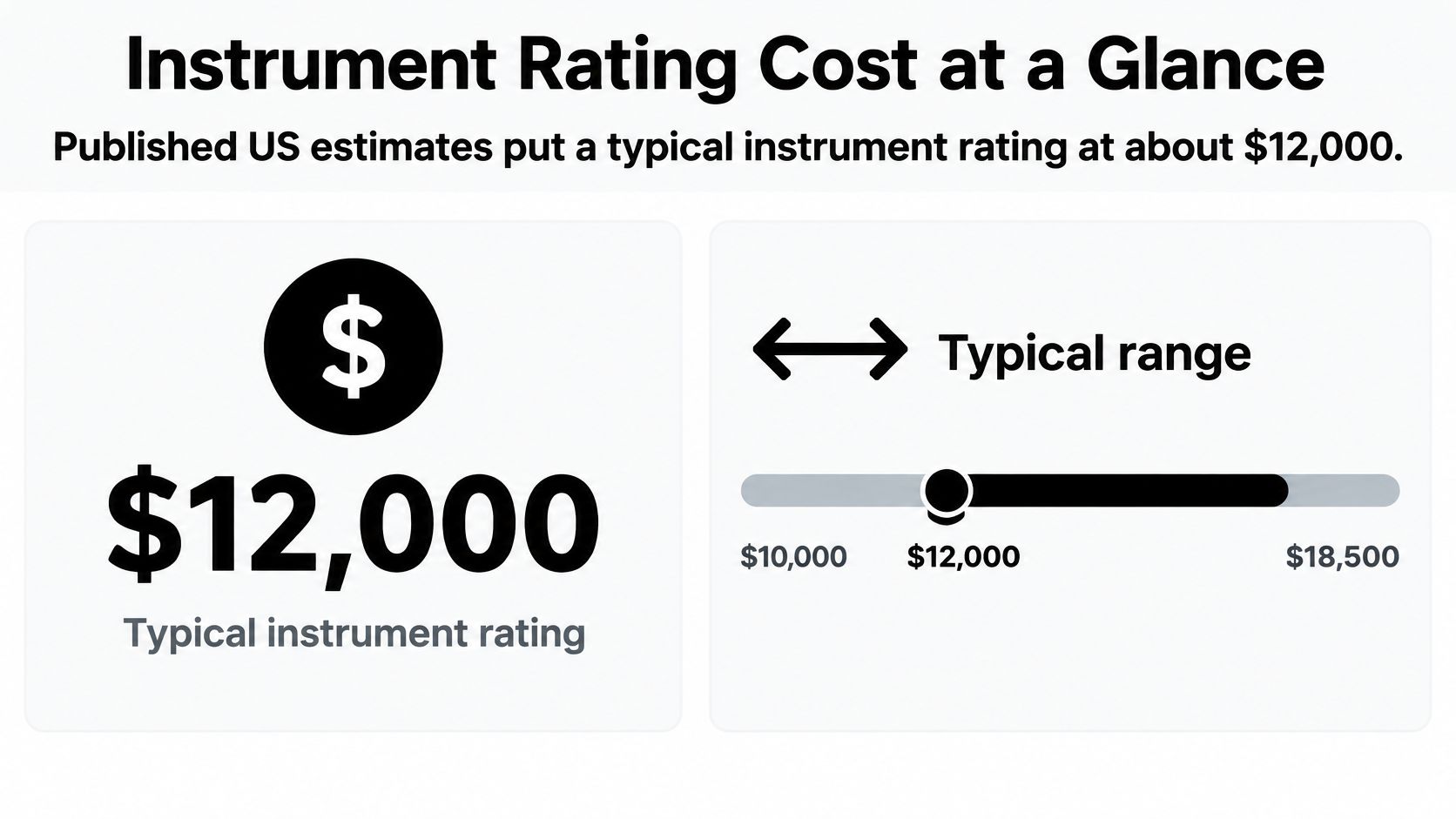
Survey results provide another point of comparison, not a personal budget. The median cost to earn an instrument rating was $12,750 in 2024, according to Redbird's 2025 State of Flight Training Survey as reported by Flight Training Central. Individual totals still depend on your logged experience, training plan, and local rates.
Why the Totals Disagree
Four factors account for much of the spread. Aircraft price matters because airplane time is a major expense. Regional labor markets affect instructor rates. Training efficiency changes how much review time is needed between lessons. And the number of airplane hours you require can move the total beyond a published estimate.
Use the table as a quote checklist. Ask the school to show aircraft, simulator, instructor, ground school, knowledge test, and practical test costs separately, and mark each as included or charged separately. If a quote doesn't separate those lines, treat it as a starting estimate, not a budget.
Examiner fees are extra everywhere, including at CFII. Confirm the fee and how it will be paid before you commit, since the school's tuition may not cover the examiner.
Why the FAA Minimum Is Not Your Final Bill
Think of the FAA minimum as the legal fuel reserve. It keeps you legal. It doesn't describe the whole trip, and nobody plans a flight by landing on reserve fuel on purpose.
Under 14 CFR § 61.65(d), an applicant generally must log 50 hours of cross-country pilot-in-command time, including at least 10 hours in an airplane, plus 40 hours of actual or simulated instrument time. The same regulation requires that at least 15 of the instrument hours be received from an authorized instructor who holds an instrument-airplane rating.
That distinction is where most budget confusion starts. Forty hours of instrument time is not 40 hours of paid dual instruction. Qualifying simulator time and other logged instrument time can count toward the total, while the paid instructor floor is smaller. But smaller floor doesn't mean small bill. You still need enough dual time to fly approaches to standard, not just log them.
What Each Requirement Does to Your Wallet
| Requirement | Part 61 minimum | What it does to your budget |
|---|---|---|
| Instrument time | 40 hours actual or simulated | Simulator time can count, which can reduce airplane hours |
| Instructor instrument training | 15 hours from an authorized instrument instructor | The paid instructor floor, not the full training bill |
| Cross-country as pilot in command | 50 hours, including 10 in an airplane | Pilots with little cross-country time pay for extra airplane hours |
| Recent instructor flight | 3 hours before the practical test | Airplane time that a simulator cannot replace |
| Private pilot certificate | Hold it, or apply for it concurrently | Private pilot training is a separate budget line |
| Knowledge test | Pass the instrument knowledge test | Test fee plus study materials |
| Practical test | Pass in an airplane or an approved device | Examiner fee plus aircraft rental for the checkride |
Walk the rows in order. The instrument time row is flexible, and that flexibility is your main lever for controlling cost. The instructor training row is the expensive floor, because you're buying an airplane and a specialist instructor in the same hour. The cross-country row is the quiet one. A pilot who already holds a private certificate but has barely left the local area can spend heavily here before instrument lessons even feel productive.
The recent instructor flight has to happen close to the test, in the airplane, so it's a finish-line cost you can't schedule away. The certificate, knowledge test, and practical test rows remind you that instrument rating cost sits on top of private pilot training for a zero-time student. It isn't a standalone first purchase.
If you want to see how those requirements sequence into actual lessons, the instrument rating course syllabus lays out the order of training. Price the gap between each row and your current logbook. That gap, multiplied by real hourly rates, is your personal estimate.
Costs Most Estimates Leave Out
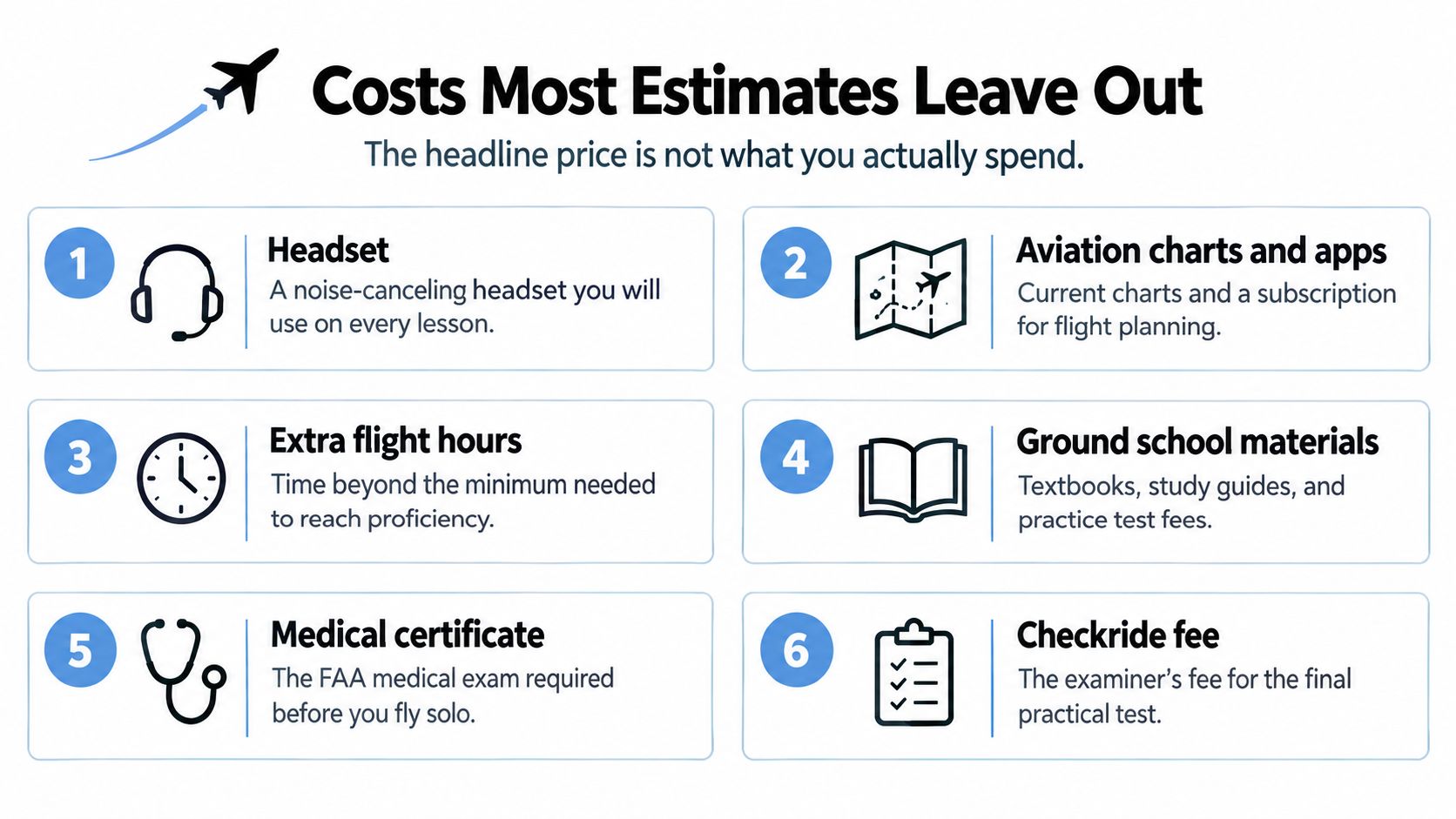
A headline price usually covers instruction and flight time. Your bank account covers everything else too, and the extras below are the ones students most often discover after they've committed.
The Checklist to Run Against Every Quote
- Pilot gear: A headset, tablet, and flight bag are not included in our Career Track price. You choose and purchase your own, so ask whether any quote bundles gear or expects you to arrive equipped.
- App subscriptions: Third-party iPad apps and subscriptions such as ForeFlight are held directly with the provider and aren't included in the Career Track price. The provider bills you, not the school, and the subscription renews whether you fly that month or not.
- Charts and electronic subscriptions: IFR flying runs on current data. Confirm who pays to keep your charts and databases current during training.
- Rental insurance or damage waiver: Aircraft rental operators may require coverage before you fly solo or rent for time building. Ask whether the school's policy covers you or expects your own.
- Travel and lodging for the checkride: If your examiner sits at another airport, you may pay to get yourself and possibly the airplane there. Ask where checkrides normally happen.
- Study materials beyond the quote: A ground school line may cover a course but not workbooks, test prep upgrades, or replacement materials. Get the full list.
- Time away from work: Lessons, weather days, and testing days consume hours no invoice captures. It still shapes your plan, especially if you train part time around a job.
None of these items is unreasonable. The problem is silence. A school that bundles an item should say so, and a school that doesn't should say that too, before you sign. Our broader breakdown of flight training cost walks through how these side expenses stack across a full training path.
The short video below is worth watching before you compare quotes, because it shows what structured training looks like day to day.
Close every school conversation with one question. Which of these items are inside the quoted price, and will you confirm that in writing? The answer tells you more about the final instrument rating cost than the headline ever will.
How Simulator Time Changes the Math
The simulator is the rehearsal room. The airplane is the stage. You repeat procedures cheaply in the rehearsal room so you don't burn expensive stage time learning the sequence for the first time.
The credit has a ceiling. FAA guidance states that under Part 61, no more than 20 hours of instrument training in a flight simulator or flight-training device may be used toward the instrument-rating aeronautical-experience requirement, while applicants trained under Part 142 may use up to 30 hours. Hours beyond the cap can still build skill, but they don't reduce the required experience total.
The Rate Gap in Plain Numbers
At $60 to $65 per hour, 20 simulator hours cost $1,200 to $1,300. The itemized estimate in the first table priced 20 dual airplane hours at $4,740. That gap is the whole argument for simulator use, and it's a strong one when the device time is creditable, instructor-supervised, and logged correctly.
Simulators suit repeatable work. Instrument scans, holds, navigation-system tracking, abnormal situations, and approach sequencing all improve with fast repetition. The device skips fuel, engine wear, landing fees, and repositioning time, so you can fly the same approach four times in the span of one airplane sortie. You can also freeze a scenario mid-error, talk through it, and restart from the exact point things went wrong.
A simulator hour only saves money when it replaces an airplane hour you'd otherwise need. If it's non-creditable or the skill doesn't transfer, it's just an extra line item.
Where the Simulator Stops
It can't do everything. The three-hour instructor flight before the practical test and the IFR cross-country requirement still need an airplane. You also need real aircraft time to learn how wind, turbulence, and workload feel when the panel is your only reference.
Before you count simulator savings in any quote, ask four questions. They take two minutes and they protect the whole budget.
- Approved device category: What is the device approved as, and for what credit?
- Creditable hours: How many hours in this package count toward the requirement?
- Instructor included: Is instructor time inside the simulator rate or billed on top?
- Airplane sessions covered: Does the package include the required airplane flights, or are those separate?
Reconcile the rates before comparing quotes. One estimate's $1,300 for 20 hours works out to $65 per hour, while another lists $60 per hour, so use the rate in the school's own written quote. For background on device approval, see the guide to FAA approved flight simulators.
What Delays and Extra Hours Add to Your Budget
The practical test requires an airworthy aircraft. Budget for the aircraft on test day, the examiner's fee, and any repositioning unless your package explicitly includes those costs. A delay can leave these items on the bill even after the training hours are complete.
Pricing the Extra Hours
At the published rates, a dual hour costs about $245 to $270, based on aircraft rental of $180 to $205 plus a $65 instructor. A solo hour costs $180 to $205 for the aircraft alone. These rates show how quickly a schedule slip can add to your total.
| Added item | Dual (aircraft plus instructor) | Solo (aircraft only) |
|---|---|---|
| 2 extra hours | $490 to $540 | $360 to $410 |
| 5 extra hours | $1,225 to $1,350 | $900 to $1,025 |
| 10 extra hours | $2,450 to $2,700 | $1,800 to $2,050 |
| One retest practical-test fee | $800 to $1,200 | Not applicable |
Consider a month-long checkride delay. If you need 5 refresher dual hours before the new test date and then need to retake the practical test, the added cost is $1,225 to $1,350 for flight time plus $800 to $1,200 for the retest. That puts the additional amount at $2,025 to $2,550.
Examiner calendars fill, aircraft need maintenance, and time away from training can make instrument skills less sharp. A gap between your last lesson and the test may mean you need refresher flights to meet the required standard. Include that possibility when you compare a quote with the budget your own schedule and logbook support.
Building Your Reserve
Set aside a reserve separately from the quoted price. A reasonable starting reserve is 5 spare dual hours plus one retest fee, or $2,025 to $2,550 at the published rates. Treat it as a starting reserve, and adjust it to your schedule. If you finish without needing the extra time or another test attempt, the money stays in your account.
Reserve test: If a quote only works when everything goes perfectly the first time, it doesn't work.
A fixed-price program may cost more upfront than a minimum pay-as-you-go estimate. The comparison changes if the pay-as-you-go route requires refresher hours or a retest. Published figures do not establish a universal break-even point. Compare what each quote includes, then account for the extra hours your schedule and logbook may require.
Why Your Region Changes the Price
There's no single national price for this rating, and the published sources behind the figures in this article don't provide a regional price table. So don't shop by city averages you can't verify. Shop by the drivers underneath the price.
The Four Regional Drivers
The local wet rate sets your aircraft line. Fuel, insurance, hangar rent, and maintenance labor all feed into what an hour of airplane time costs at a given airport. Two schools can teach identical syllabi and quote very different totals purely because their airplanes cost different amounts to operate.
Instructor pay sets the second line. In a market where experienced instrument instructors are scarce, you'll pay more per hour and may wait longer for scheduling. That wait has its own cost, because gaps between lessons create review time.
Examiner distance is the driver students forget. If the nearest available examiner is hours away, each checkride attempt may involve travel, repositioning the airplane, and a bigger penalty when weather cancels the day. Ask where students test in practice, not where the school hopes they'll test.
Weather and season decide how many scheduled flights finish. A region with frequent cancellations stretches your calendar, and a stretched calendar adds refresher hours. Steady flying weather isn't a luxury in instrument training. It's a cost control.
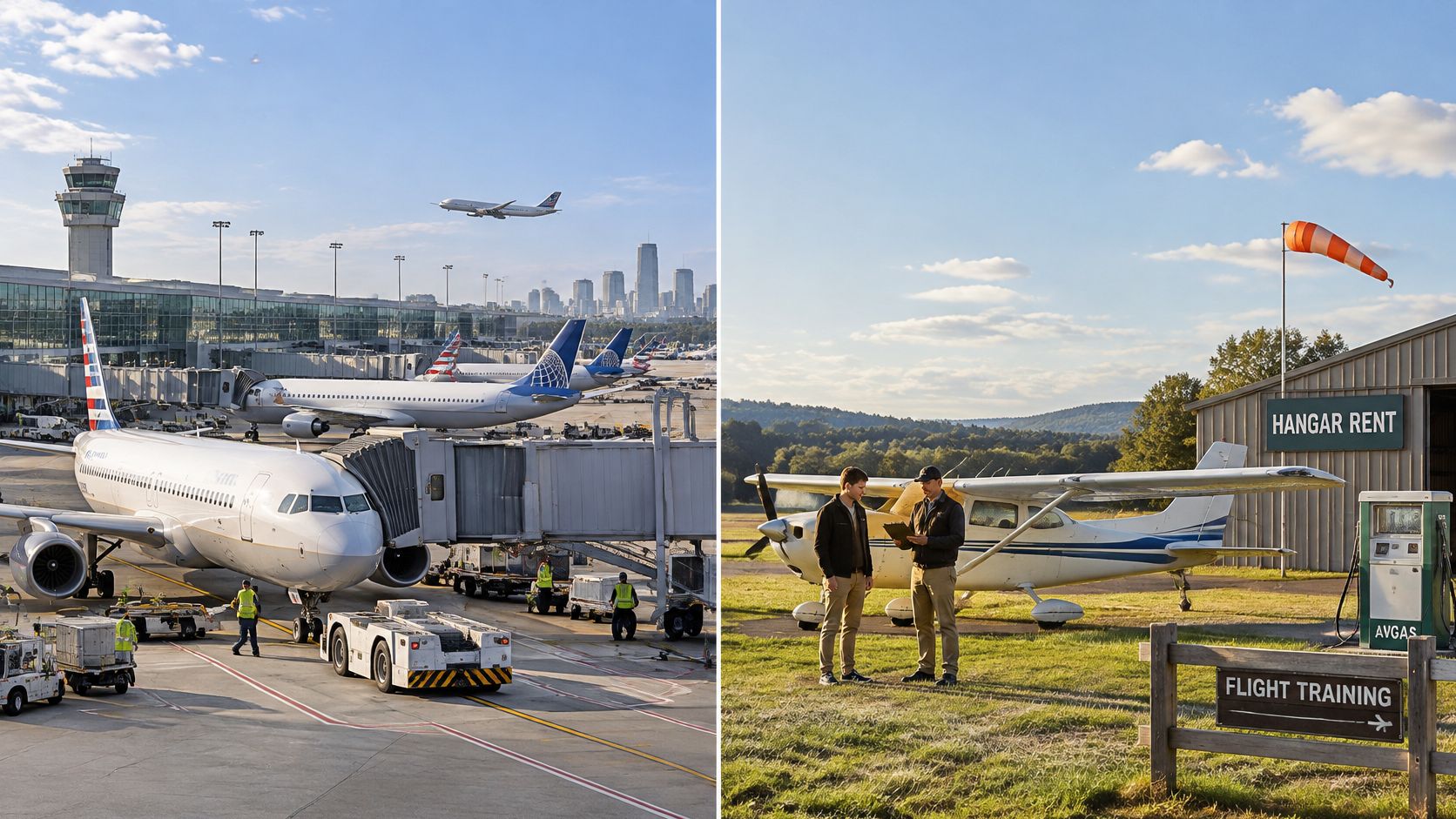
Our training bases sit in Riverside, Long Beach, and Corona in Southern California. We state that our Career Track is the lowest published career price in Southern California once multi-engine is counted, but you should still check any school's description of its operating conditions against its cancellation record. Ask how often lessons scrub and how quickly students get rescheduled. If you're comparing the state broadly, the overview of flight schools in California gives you regional context.
Living costs belong in the comparison too. If you relocate for training, housing and transport can rival the training budget itself over several months. A cheaper hourly rate in an expensive city can lose to a higher rate somewhere you can afford to live.
Compare regions only when the inclusions match. Simulator time, examiner fees, retest policy, and gear all have to line up, or you're comparing two different products and calling the difference geography.
Confirm the Price in Writing Before You Commit
A quote is useful only when its scope matches the training you plan to complete. Compare the written offer line by line with the cost table in this article. Check that each charge has a clear amount or is explicitly identified as extra, and that the quote describes the same training path you are budgeting for.
| Path | What you pay for | Where the risk lands |
|---|---|---|
| Pay-as-you-go lessons | Only the hours you book | Extra hours, retests, and scheduling gaps fall on you |
| Fixed-price structured program | Tuition with its listed inclusions | Exclusions, retest policy, and examiner scheduling must be confirmed in writing |
| Discovery flight before committing | The flight you take to see whether flying suits you | Little financial risk, but no training credit toward a rating |
Which Path Fits Your Logbook
Pay-as-you-go can suit a pilot who has already completed much of the required experience. If your cross-country time is largely done and you can fly on a steady weekly schedule, paying by the hour gives you control over when to spend. The trade-off is that gaps can mean repeating lessons and adding hours, so a lower hourly rate does not guarantee a lower final bill.
A fixed-price program suits a zero-time pilot who wants the full training path budgeted upfront. The tuition is set, but the contract still matters: check which instruction, ratings, hours, and services it includes, and which costs remain yours. That makes the quote easier to compare with a pay-as-you-go estimate based on your expected logbook, rather than on an hourly rate alone.
CFII's Career Track is a fixed $89,000 program from zero experience to flight instructor in about nine months full time. It includes six certificates and ratings, 282 hours, all instruction, and financing for the full amount. This is one option for budgeting the whole career-training path rather than pricing each rating separately.
If you have not flown yet, take a flight before making a tuition decision. A discovery flight gives you a chance to see whether flying suits you before you commit to a training budget.
The Questions That Protect You
Use the written quote to compare like with like. For every line in the cost table, note whether the school includes it, excludes it, or bills it separately. Then check how the school operates: ask about airplane age, students per airplane, instructor turnover, Part 61 versus Part 141, and whether you can fly before committing. CFII recommends asking these questions of every school, including CFII.
For a practical framework to assess schools and compare their answers, use this guide on how to choose a flight school.
Get the quote in writing, compare its line items with your expected training costs, and confirm any unclear terms before paying. Make sure the document identifies the program, inclusions, exclusions, and applicable retest policy. Then decide whether the stated price and payment path fit your budget.
If you are pricing an instrument rating as one step toward a flying career, CFII's Career Track bundles the training into a fixed $89,000, roughly nine-month path from zero experience to flight instructor, with multi-engine included. Visit CFII to review the program, check its written inclusions, and decide your next step with the numbers in front of you.
Planning to fly for a living?
See what the path from zero to a pilot career looks like, what it costs and how long it takes.
Learn to fly in Riverside
We train at Riverside Municipal Airport in modern airplanes with a parachute built in. Start with a one hour discovery flight, no experience needed.