
On this page
- What You Will Actually Pay to Become a Pilot
- What that range really means
- FAA Minimums and What They Mean for Your Budget
- Private, instrument, and commercial each add a new layer
- Accelerated vs Modular Training and How Pricing Differs
- The pay-as-you-go model
- The fixed-tuition model
- Hidden Fees That Push the Final Bill Higher
- The line items that usually surprise people
- From Certificates to Airline Eligibility, the 1500-Hour Cost
- Why the second phase matters
- Why Checkride Delays Raise Your Total Cost
- Financing Options and How to Lower Your Out-of-Pocket Cost
- How students usually cover the bill
- Building Your Own Flight Training Cost Plan
- A simple planning checklist
Professional U.S. flight training pathways cost between roughly $72,000 and $97,000 in published program data, and a fixed-price option like CFII's $89,000 Career Track sits inside that band. That's the number most need first, because the core question isn't whether flight training is expensive, it's how much cash you'll need before the first paycheck.
You may already be doing the math in your head. The sticker price sounds large, but the bill only makes sense when you separate the first phase of training from the second phase of building enough experience to be employable.
What You Will Actually Pay to Become a Pilot
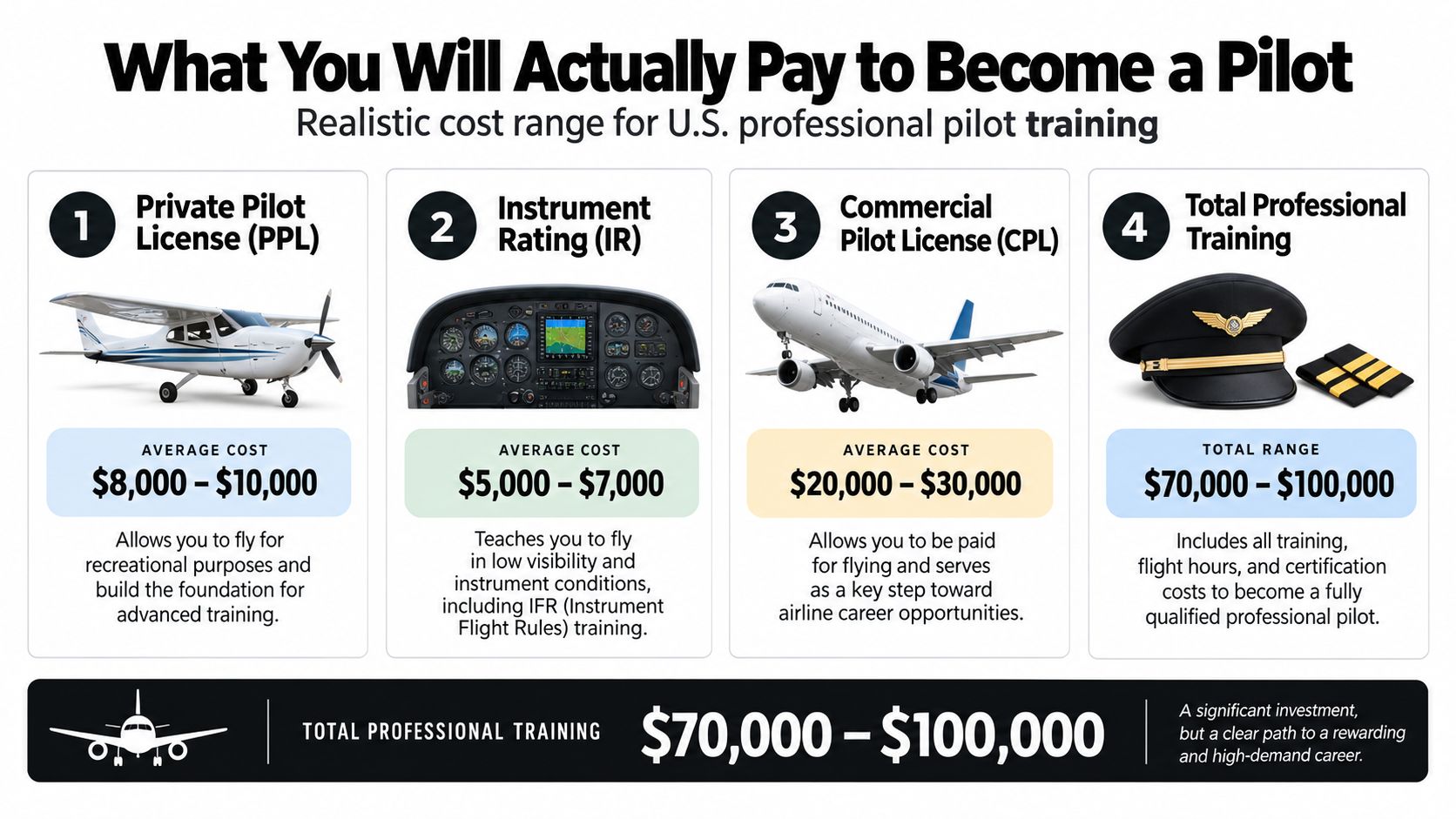
A realistic flight training cost conversation starts with the published benchmark, not with a school's headline promise. Congressional data cited about $72,000 for one U.S. vocational pathway and $96,995 for another, with the gap driven by what each package includes, how many hours are built in, and whether the price covers items like simulator time, checkrides, housing, or extra experience-building flights (FAA economic analysis reference).
What that range really means
A student comparing programs often focuses on the tuition number and misses the structure behind it. One package may stop at certificates and ratings, while another reaches further into multi-engine training and other career-specific steps. That's why two quotes that look similar can lead to very different out-of-pocket totals.
Practical rule: treat the published tuition as a starting point, not a final answer.
If you already know you want a full zero-to-CFII path, CFII's Career Track gives you one fixed-price example to compare against the broader market. If you have never flown before, a discovery flight is a simpler first step, because it helps you confirm that the cockpit, the workload, and the lifestyle fit you.
A useful internal reference is this flight school cost overview, because the budget question that matters is never just “What's the tuition?” It's “What do I have to pay before I can reasonably expect to earn flying income?”
FAA Minimums and What They Mean for Your Budget
An FAA minimum tells you the legal floor, not the actual cost of getting ready for a first paycheck. A private pilot applicant must meet the requirements in 14 CFR § 61.109, and the FAA's hourly requirements FAQ explains the training elements that sit inside that minimum, including instructor time, solo time, and experience in cross-country, night, and instrument work (FAA hourly requirements FAQ).
Private, instrument, and commercial each add a new layer
That floor is not a finish line. A student may meet the legal minimum and still need more dual instruction, more aircraft time, and more practice before a checkride feels realistic. A 2025 AOPA survey places the median private certificate near $14,000, the instrument rating at $12,750, and commercial training at $28,000, which shows how quickly the bill rises beyond bare compliance.
The FAA minimum says what you are allowed to do, not what a new student is likely to spend.
The instrument rating adds a timing requirement that changes the budget. Under 14 CFR § 61.65, an applicant must complete at least three hours of instrument training with an authorized instructor in the two calendar months before the practical test. If the test moves back, that recent training may need to be repeated, which becomes another line item in the school bill.
Commercial training raises the bar again. Under 14 CFR § 61.129, an airplane single-engine commercial applicant generally needs at least 250 hours as a pilot. The next step is larger still, because FAA materials say the unrestricted ATP route normally requires 1,500 hours of total pilot time (FAA ATP rule).
A clear way to connect those certificates to the bill is explained in this pilot certification training article. The budget question is simple: what do you have to pay before you can reasonably expect to earn flying income?
Accelerated vs Modular Training and How Pricing Differs
Two students can reach the same cockpit goal and pay in very different ways. One pays lesson by lesson, usually at hourly rates. The other buys a fixed syllabus with a published tuition. The core tradeoff is predictability against flexibility, not just fixed tuition against hourly billing.
The pay-as-you-go model
In a modular setup, you usually pay separately for aircraft time, instructor time, ground school, and checkrides. That can look cheaper at first because the hourly rate feels manageable. The final bill grows whenever a lesson runs long, a recheck is needed, or weather forces a pause. If training is spread out, the costs tend to drift upward.
The fixed-tuition model
A fixed-price program gives you a defined scope and a clearer cash target. One example is CFII's Career Track, a fixed-tuition pathway in Southern California that bundles a set syllabus and published training outcomes (CFII Career Track). The point of that model is simple. You can see more of the bill before you start spending.
| Accelerated vs Modular Training at a Glance | Pricing model | Ratings included | Typical timeline | Overrun risk | Cash required upfront |
|---|---|---|---|---|---|
| Accelerated | Fixed tuition | Defined syllabus and ratings | Structured, shorter path | Lower if scope is clear | Higher |
| Modular | Pay as you go | You build step by step | Depends on pacing | Higher if lessons stretch out | Lower at the start |
A useful guide to the pace and structure of this kind of training is this accelerated flight training guide. The comparison is not just about tuition versus hourly billing. It is about how much certainty you want in the amount of cash you must produce before your first paycheck.
A fixed package can still feel expensive because the money comes due sooner. A modular path can feel easier because it spreads payments out, but that spread can hide the true total until the schedule slips. Like a cross-country flight, the route with fewer stops is easier to forecast, while the flexible route gives you more room to adjust along the way.
Rule of thumb: the cheaper-looking path can become the more expensive one if it loses momentum or forces repeat lessons.
That is why pricing should be judged on three points, not one. Look at the published total, check how much of the syllabus is included, and ask how exposed you are to extra lessons if training takes longer than planned.
Hidden Fees That Push the Final Bill Higher
A student can get the tuition quote, feel prepared, and still discover that several bills arrive before the first solo or checkride is complete. Those extra charges usually sit outside the headline price, and they are easy to miss if you only compare package totals.
The line items that usually surprise people
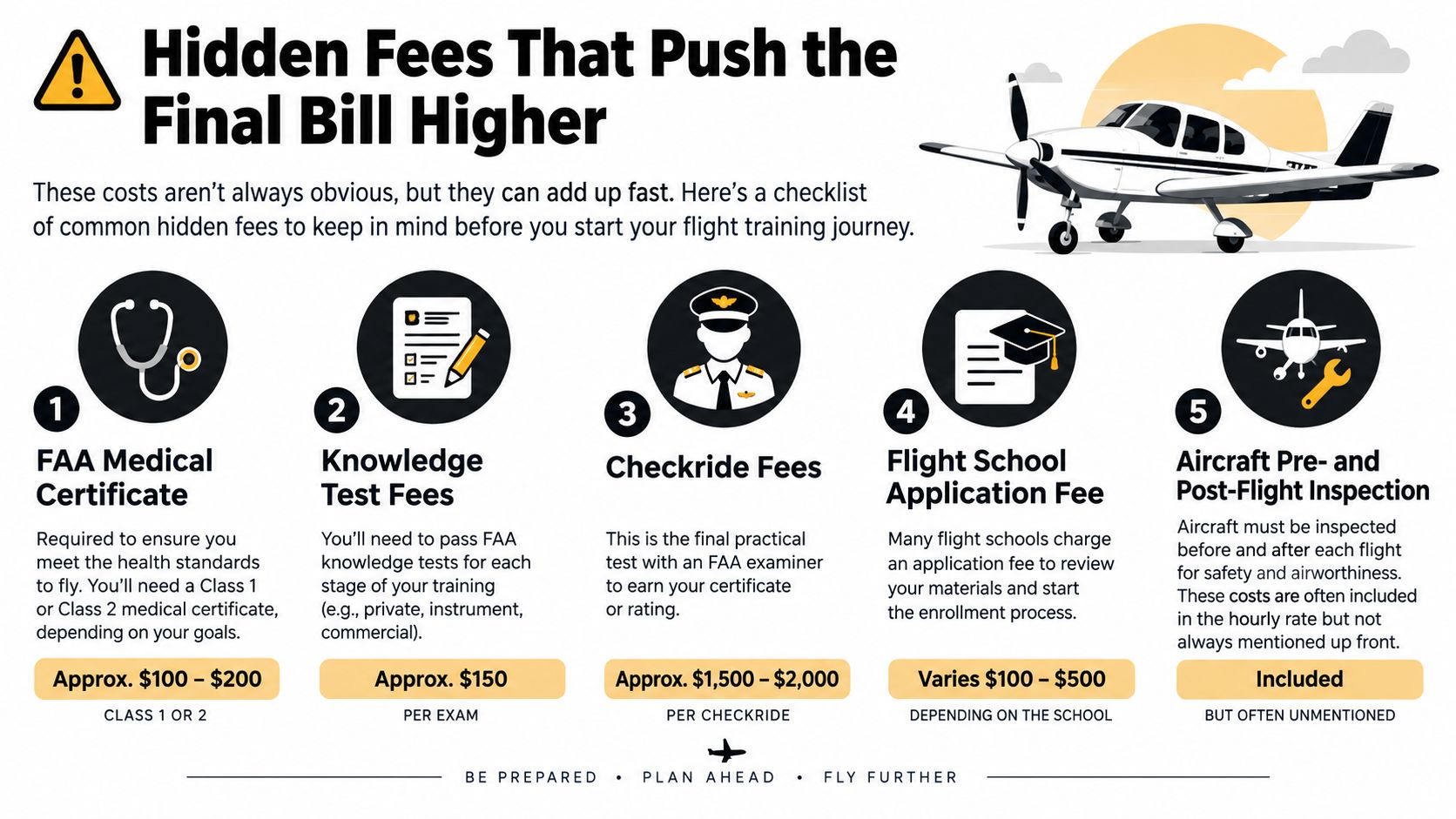
The first surprise is often the FAA medical certificate. That visit is billed separately from flight time, so it belongs in the budget from the start. Written tests add another layer, and so do practical-test examiner fees. In some cases, aircraft rental is charged for the checkride itself, which means the final day of training can cost more than students expect.
Gear also adds up in small pieces. A headset, electronic charts, study materials, a logbook, and flight-bag items are not glamorous purchases, but each one becomes part of the actual flight training cost. The total is easy to underestimate when the school quote only covers instruction.
The Government Accountability Office found that flight-training fees at collegiate aviation programs often exceeded $50,000 on top of tuition, a clear sign that tuition alone does not describe the full bill. See the GAO analysis of collegiate flight-training costs for the policy context tied to that finding.
A simple checklist makes the extra charges easier to see:
- Medical and paperwork: budget for the FAA medical and any administrative items tied to enrollment.
- Written exams and retakes: each stage can bring another test fee if a retake is needed.
- Checkride costs: examiner time, airplane time, and rescheduling can all affect the final amount.
- Equipment: headset, iPad or chart tools, and training materials are real purchases.
- Training interruptions: if a student falls behind or loses currency, extra flights may be needed to get ready again.
A clear guide to flight training courses helps here, because the better question is simple: what still has to be bought out of pocket before the student is ready to test?
Some fixed-tuition programs bundle more of these items than others, but many do not. Read the enrollment agreement closely, especially the sections on examiner fees, retests, and any extra hours beyond the advertised package.
From Certificates to Airline Eligibility, the 1500-Hour Cost
A commercial certificate gets you into paid flying. Airline hiring often asks for much more. The earlier FAA minimum of 1,500 hours sets the regulatory floor, but the budget question is what it costs to bridge from that floor to the hours employers expect.
Why the second phase matters
That bridge has its own price tag. You are no longer just paying for instruction, you are also paying to accumulate time, and time building can mean lower earnings, extra fuel, instructor fees, or more months before the first airline paycheck.
CFII's Career Track shows how that second bill can look in practice. Its stated path reaches 282 total hours by month nine, and the optional $15,000 add-on includes a 25-hour instructor bootcamp and 175 paid instructing hours at $30 per hour, bringing the stated minimum to 480 hours by month 18 (CFII Career Track). That still leaves a wide gap between a training finish line and airline eligibility.
The FAA rule explains the threshold. Airline hiring often raises the bar beyond it, which is why hour-building deserves a line in your budget just like ratings, checkrides, and written tests.
Finishing certificates does not mean finishing the spending.
For a career-changer, this is the second cash test. The first budget gets you qualified to work in aviation. The second budget gets you enough experience for airlines to take you seriously, and that can reshape how long you wait before income starts to catch up with your training spend.
Why Checkride Delays Raise Your Total Cost
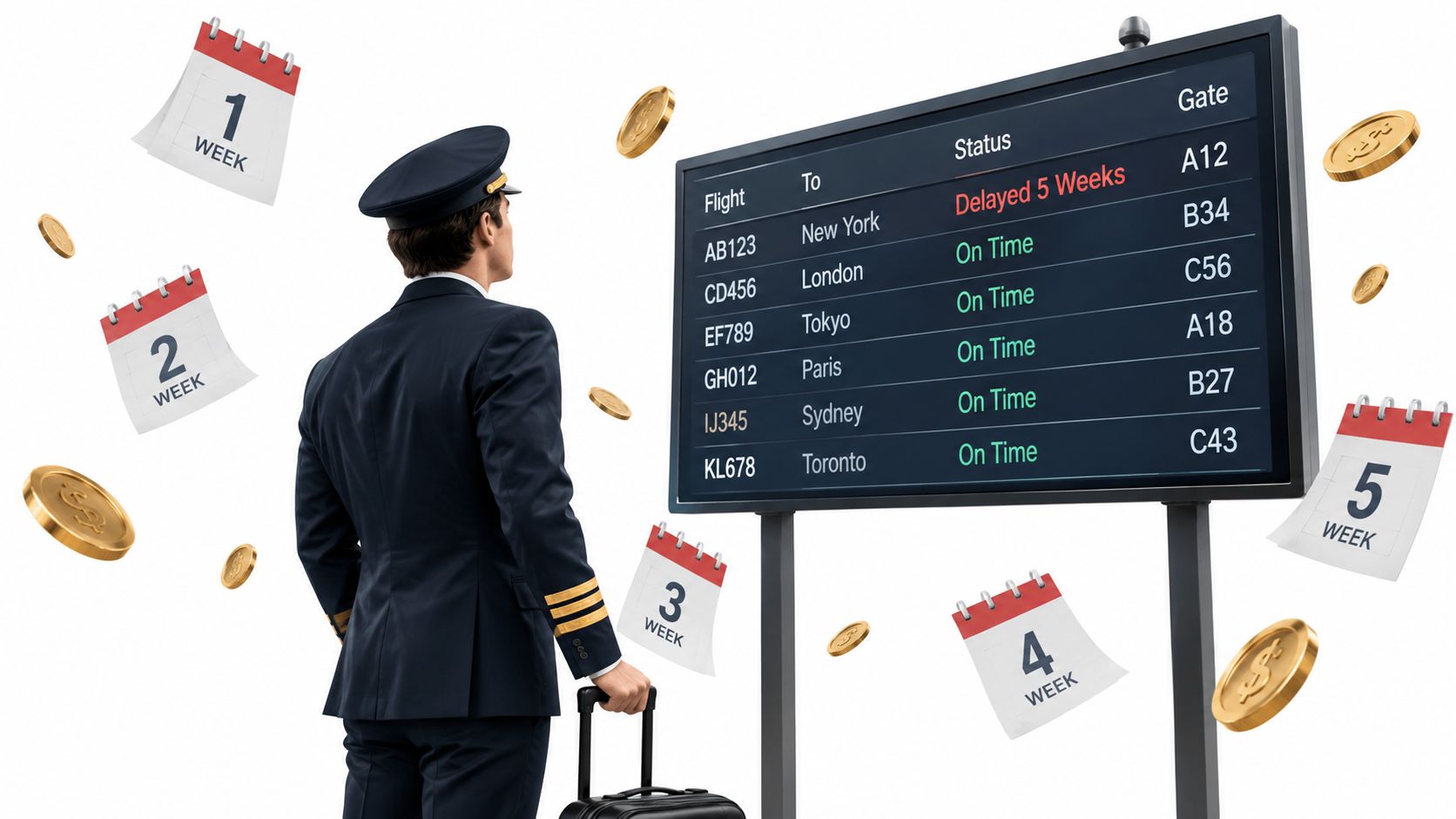
A checkride delay turns a finished student into a waiting student, and waiting costs money. An ERAU study found an average checkride wait of five weeks, and 91% of respondents said examiner availability was an operational problem (ERAU study). If your airplane time stays on the books but your practical test does not, your budget starts paying for idle time instead of progress.
The same study reported 1,122 active designated pilot examiners and 153,967 practical tests in fiscal year 2024–25. That sounds like plenty of capacity on paper, but access still depends on where you train and how busy the local examiner pool is. A school with better scheduling control can save you weeks of carrying costs.
Those weeks often trigger extra expenses in a chain:
- Refresher flights, because skills get rusty when the test moves back.
- Instructor time, because the review has to happen again.
- Housing overlap, if you moved for training and need to stay longer.
- Lost work time, if the checkride delay also delays your first paycheck.
The instrument rating adds another layer. The § 61.65 two-month window discussed earlier means recent training has to stay current close to the practical test. A delay inside that window can force more paid flying even when your syllabus is otherwise complete.
Schools that book examiners early and prepare students for the written and practical steps reduce one source of cost creep. Ask who schedules the checkride, what happens if the date slips, and whether any refresher time is included or billed separately.
Financing Options and How to Lower Your Out-of-Pocket Cost
Most students don't pay for pilot training out of one savings account. They combine savings, help from family, a loan, or some mix of all three. The right choice depends on how much monthly payment you can carry while you train and how much flexibility you need if the timeline slips.
How students usually cover the bill
Self-funding gives you the cleanest balance sheet, but it puts the full burden on your cash reserves. Family support can reduce borrowing, though it brings relationship risk if expectations aren't clear. Aviation-focused lenders may offer payment structures designed around flight training, and some schools build financing into the enrollment process.
CFII says it offers financing through Stratus Financial with 12-month payment deferral, consideration beyond typical FICO metrics, and no prepayment penalties, and its student housing near Riverside is listed at $1,300 per month in furnished shared apartments (CFII housing and financing details). That matters because housing can be just as important to your monthly budget as the tuition itself.
A simple way to think about the tradeoff is this. Deferral lowers the pressure while you're training, but it can raise the total amount you repay later. Immediate repayment usually costs less over time, but it demands more cash flow right away.
Lowering out-of-pocket cost is good. Lowering quality to do it is not.
You can also reduce cost without cutting corners by choosing a program that includes more of what you'd otherwise buy separately, using simulator time where it substitutes for more expensive aircraft time, and avoiding failed stage checks through disciplined study. If you're comparing funding options, start with the monthly payment you can survive, then test whether the housing, training pace, and expected timeline fit that number.
Building Your Own Flight Training Cost Plan
A good budget has three versions, not one. Start with a best-case scenario, then a typical case, then a delay-or-retake case. That gives you a more honest picture of what you'll need before you sign anything.
A simple planning checklist
- What is guaranteed: ask how many hours, ratings, and simulator sessions are included.
- What can change the bill: ask what happens if you need extra hours or repeat a stage.
- What is bundled: confirm whether checkride coordination, study materials, and written-test prep are part of the package.
- Who manages scheduling: ask who books the examiner and what happens if the date moves.
- How you'll live: check whether housing and financing exist, and if so, how they affect your monthly cash need.
If you've never flown, a discovery flight is the lowest-friction next step because it tells you whether the environment feels right. If you're ready to commit to the full path, a structured zero-to-CFII program can make the timeline and scope easier to predict.
The biggest lesson is simple. The cheapest published price is rarely the lowest total cost once hidden fees, delays, and time-building are added. A smart flight training cost plan looks past the brochure and asks what it really takes to reach the first paycheck.
If you want a clearer path from zero experience to instructing, CFII lays out a fixed-price Career Track with structured training, coordinated checkrides, and a defined hour total in Southern California. Visit CFII to review the program, compare the included items against your own budget, and decide whether the timeline fits the career you want.
Planning to fly for a living?
See what the path from zero to a pilot career looks like, what it costs and how long it takes.
Learn to fly in Riverside
We train at Riverside Municipal Airport in factory-new airplanes with a parachute built in. Start with a one hour discovery flight, no experience needed.