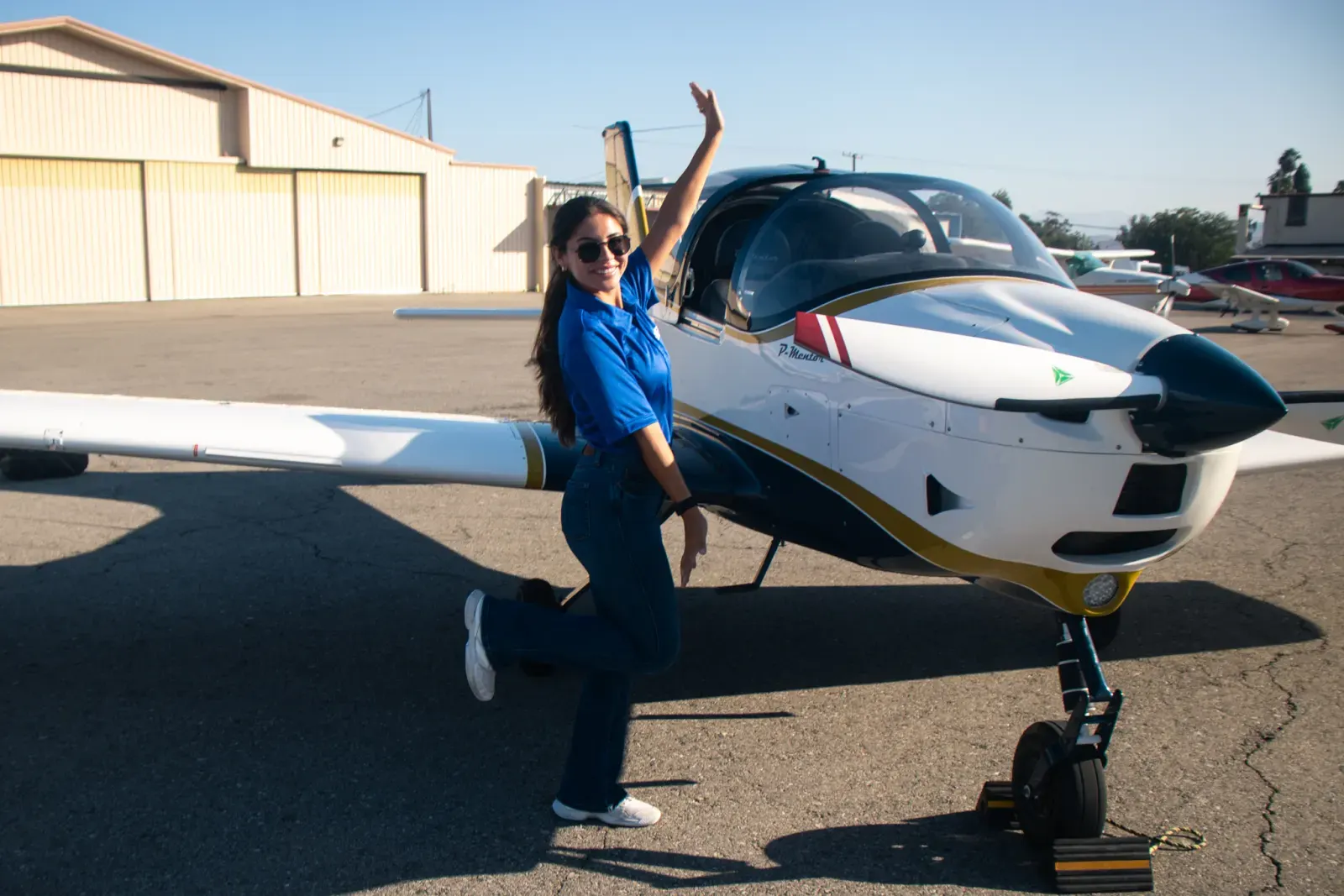
Important milestones
Along your aviation journey, you’ll reach several important milestones. Here are a few of the key ones, not including all the additional certificates and ratings you’ll earn along the way.
- First Solo: Flying the airplane alone for the first time, you are actually doing it! At this point you really start feeling like a pilot, even though there is plenty yet to learn.
- Private Pilot Certificate: You’re now an FAA-certified pilot with the license to prove it. You can fly on your own, take passengers, and start exploring the skies with real freedom.
- Career Program Graduation: You’ve completed your career pilot training and earned the certificates and ratings needed to start flying professionally. Now it’s time to build experience, grow your flight hours, and take the next step toward the airlines.
- Your First Airline Job: You’re officially an airline pilot. From here, you’ll continue building experience, advancing through the ranks, and growing your career in aviation.
Private Pilot Certificate
The first major step in becoming a pilot is earning your Private Pilot License. Most students need around 60–70 hours of flight time, and in our career program we spend roughly the first three months working toward this milestone. It’s not just about learning how to fly the airplane, you’ll also learn weather, aerodynamics, aircraft systems, airspace, regulations, navigation, and the fundamentals every pilot needs to fly safely and confidently.
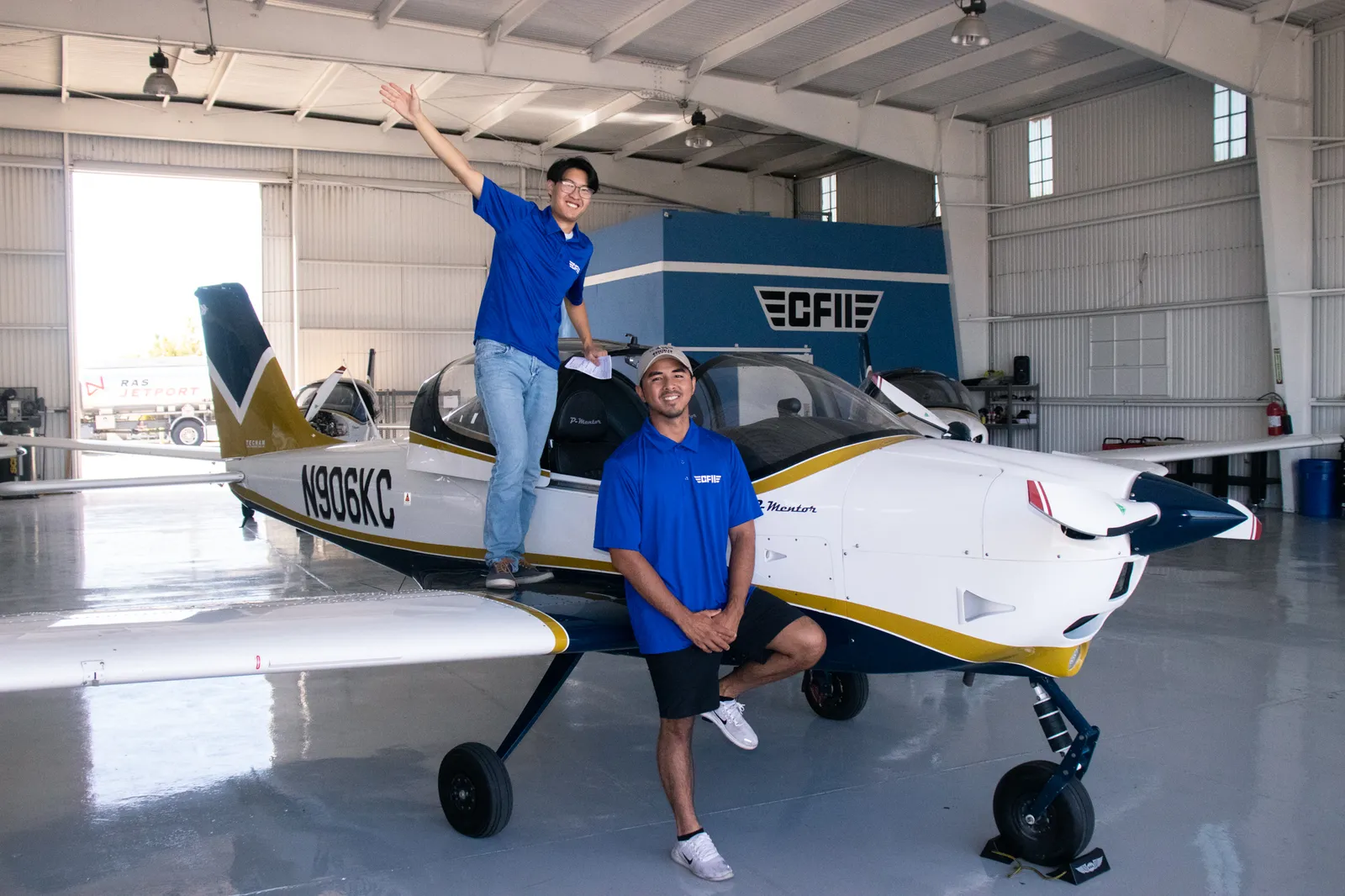
The professional timeline
Here’s a breakdown of the certificates, requirements, and typical timeline for career pilot students working toward the airlines.
| Step | FAA minimum | Full-time pace |
|---|---|---|
| Private pilot | 40 hours | 2 to 3 months |
| Instrument rating | 50 hours cross-country PIC, 40 hours instrument | 2 months |
| Commercial pilot | 250 hours | Reached along the way |
| Instructor: CFI, CFII, MEI | Commercial certificate, then checkrides | 6 to 10 weeks |
| Airline transport pilot | 1,500 hours, or 1,000 with an aviation degree | 12 to 18 months instructing |
Minimums are the floor, not the plan, and the hours stack: the 250 for a commercial certificate include everything flown before it.
A continuous program collapses the first four rows into one block. Ours is about nine months, zero experience to six certificates and ratings with 282 hours logged, for $89,000. The pace comes from flying most days, not from a shortcut in the rules.
Timebuilding towards the airlines
You leave training with 250 to 300 hours and an ATP needs 1,500. So about 1,200 hours have to come from flying. Most new commercial pilots build them instructing, which is paid work that counts, at 40 to 60 hours a month at a normal school and 80 to 100 at a busy one. That is the 12 to 18 months.
Two things shorten it. An aviation degree from an FAA-authorized school lowers the bar to 1,000 hours, 1,250 with an associate. And a school that keeps its instructors busy year round gets you there faster than one whose airplanes sit out the winter.
What makes it take longer
- Flying too rarely: The biggest factor and the only one you control. Fly once a month and half of every lesson goes to getting back where the last one ended.
- Weather: Low cloud, wind and winter cancel lessons. Seattle averages 226 cloudy days a year against 103 in Los Angeles, and cancelled days add hours as well as weeks.
- Airplanes and instructors: A school with more students than aircraft rations lessons. An instructor who leaves for an airline mid-training costs you a few flights. Ask about both before you enroll.
- The examiner queue: Checkrides are booked with a designated examiner, not with your school, and in busy areas the wait runs weeks.
- Paying a lesson at a time: Once you start your flight training, ideally you want to complete it all without major pauses. Pauses atrophy your skills and you end up using more hours than you would without breaks.
What age can I start flight training?
There is no minimum age to start taking lessons. The ages below are the earliest each certificate can be issued.
| Age | What you can earn | What it lets you do |
|---|---|---|
| 16 | First solo | Fly the airplane alone, on your instructor's sign-off |
| 17 | Private Pilot License | Carry passengers, on your own schedule |
| 18 | Commercial Pilot License | Be paid to fly |
| 21 | Restricted ATP | Fly for an airline, with a degree or military time |
| 23 | Full ATP | Fly for an airline with no restriction |
There’s no upper age limit to start learning to fly, but for an airline career, starting earlier can be valuable. Airline pilots currently retire at 65, and every year of seniority can influence your pay, schedule, aircraft, and where you’re based throughout your career.
Questions
How long does a private pilot license take?
The FAA minimum is 40 hours. Most people fly 60 to 70. Calendar time is set by how often you fly: three to five lessons a week puts the checkride two to three months out, once a week pushes it past nine months.
How long from zero to an airline?
Two to four years full time. About nine months for the certificates, then 1,500 hours for an ATP. Most pilots build the difference instructing, which takes 12 to 18 months at a busy school.
Can I train part time while working?
Yes, and most private pilots do. It takes longer and costs more, because skills fade between lessons. Two flights a week is roughly the line where part-time training still moves forward.
How many hours a month does an instructor fly?
About 40 to 60 at a normal school, 80 to 100 at a busy one in good weather. That range is why the 1,500-hour build takes 12 months for some pilots and two years for others. Ask a school before you sign.
What are the age limits?
Solo at 16, private at 17, commercial at 18, restricted ATP at 21, full ATP at 23. No upper limit. Airline pilots retire at 65, which is what makes starting earlier worth money.
Sources
- 14 CFR 61.109, aeronautical experience for a private pilot certificate
- 14 CFR 61.129, aeronautical experience for a commercial pilot certificate
- 14 CFR 61.159, aeronautical experience for an ATP certificate
- 14 CFR 61.160, restricted-privileges ATP aeronautical experience
- AOPA, what a pilot certificate costs and how many hours it takes
- AOPA flight training research on student dropout (about 80% do not finish)
- NOAA Comparative Climatic Data, annual cloudy days by city
Last reviewed September 2026. Figures are the most recent published at that time. Wages, prices, rules and airline hiring minimums move, so check the source before you make a decision on one of these numbers.