

On this page
- What a Discovery Flight Price Really Covers
- Compare the contents before the total
- Why the First Flight Stays with an Instructor
- Solo comes after demonstrated readiness
- A first lesson isn't a completed qualification
- What Changes the Discovery Flight Price
- What the aircraft premium buys
- What the package adds
- Discovery Flight Price Examples by Aircraft
- Sample Discovery Flight Prices by Time and Aircraft
- What lesson one should feel like
- How to Choose a School After the Quote
- Compare the operation behind the introduction
- Keep the local lesson separate from the career program
- Questions Worth Asking Before You Pay
- Send a clear booking checklist
- Use the flight to reduce training uncertainty
- Your Next Step After the Discovery Flight
- Decide what the lesson showed you
- Make the next commitment deliberately
A discovery flight is a first lesson with an instructor, and CFII charges $200 for its one-hour flight, with no experience required.
Compare airborne minutes, aircraft class, and whether the time counts as dual instruction. A quoted hour may include ground time, so ask how much of the appointment is spent flying and taking the controls.
For someone exploring a flying career, the useful purchase is a bundled first lesson. You meet the instructor, learn how the first flight works, and get a feel for the training environment. Treat the price as the cost of that introduction, not a guide to the total cost of earning certificates.
What a Discovery Flight Price Really Covers
A discovery flight is a first lesson in a compact package. Its value depends on how long you spend airborne, what kind of aircraft you use, and whether the instructor records the time as dual instruction. The booking duration alone does not answer those questions.
In a survey of 287 schools, the median advertised price was about $179, with prices ranging from $49 to $599, according to discovery-flight pricing benchmarks. Those figures describe a wide range of packages, not a standard lesson.
That spread doesn't mean the lowest-priced school is automatically the best value. It means you need to read the package description.
Compare the contents before the total
Use the same checks for every quote:
- Airborne time: How much of the appointment will you spend flying?
- Ground instruction: Are the preflight explanation and postflight discussion included?
- Aircraft type: What class of aircraft will you fly?
- Instructor inclusion: Is the instructor's time included in the advertised price?
- Final charges: Are taxes, booking fees, or other charges added?
A lower-priced package may provide a shorter flight, while a higher-priced one may include more time in the air. Ask what each quote includes before comparing totals. Ground time and airborne time are different parts of the lesson, like setup time and practice time in any hands-on class.
Practical rule: Compare the lesson you'll receive, not just the number beside the booking button.
CFII offers a one-hour discovery flight for $200, with no experience required. It begins with an instructor and a walk-around of the airplane, then gives you a chance to take the controls in the air. If you have flown before, the lesson can be adjusted to help you learn something new while getting familiar with CFII's aircraft.
The quoted price is a starting point. Ask how much of the hour is airborne and whether the instructor will log the flight as dual instruction. For a clearer picture of what a first lesson involves, read this guide to flying lessons.
Why the First Flight Stays with an Instructor
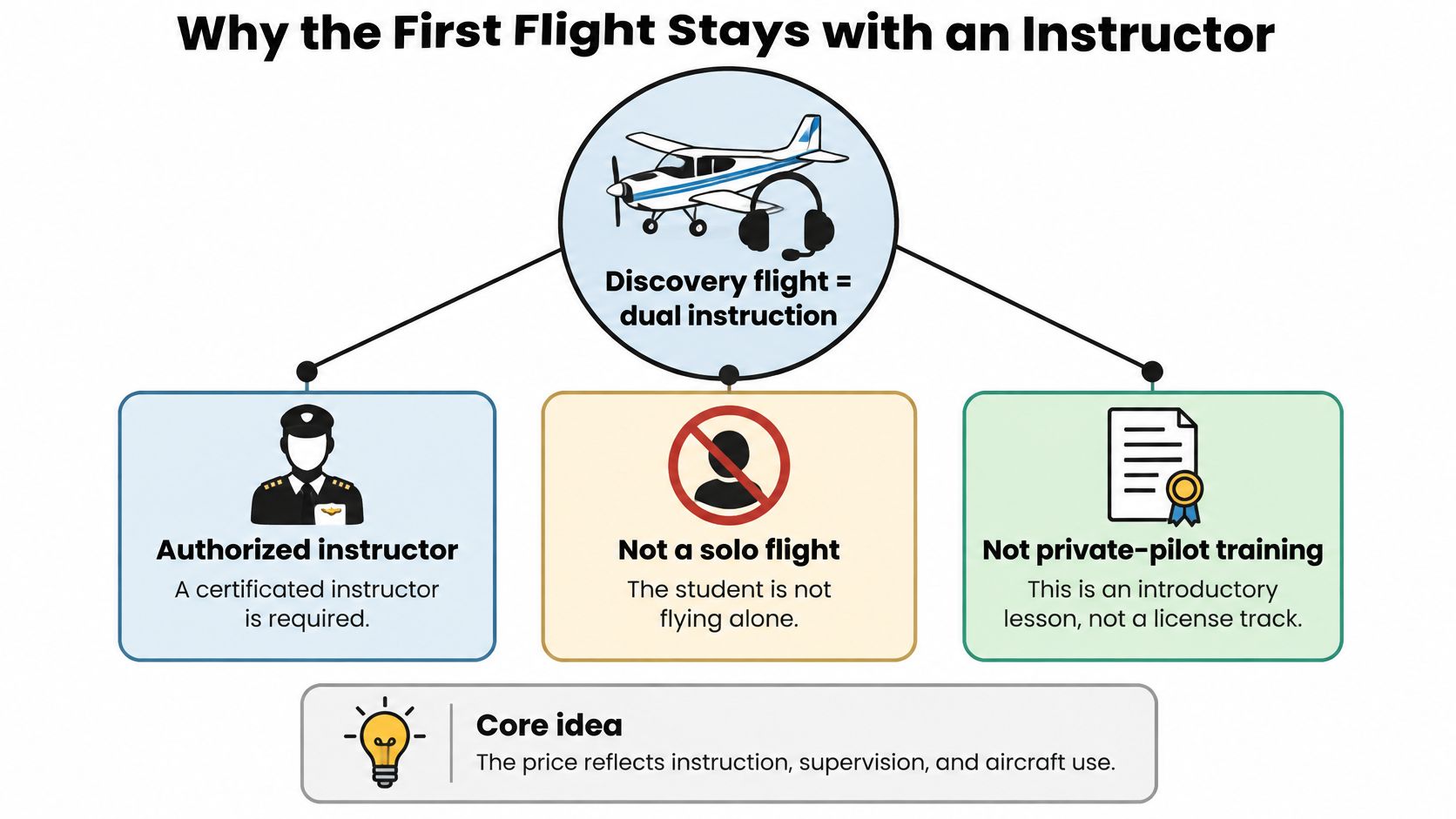
Taking the controls doesn't mean you're flying solo. On a discovery flight, you fly with an authorized instructor who decides which activities are appropriate and supervises the lesson.
That distinction matters because the instructor isn't an optional extra you can remove to reduce the price. Instruction and supervision are central to what you're buying.
Solo comes after demonstrated readiness
Under 14 CFR § 61.87, student solo requirements, a student must complete the required knowledge testing, receive and log pre-solo training, demonstrate proficiency, and obtain an aircraft-specific instructor endorsement before solo flight. Continuing solo privileges require the applicable endorsement within the preceding 90 days.
You aren't purchasing those privileges with an introductory booking. You're purchasing supervised exposure to the airplane and the beginning of instruction.
A discovery flight may be loggable as dual instruction when it's structured and documented appropriately. Don't assume the marketing name alone establishes that. The instructor needs to explain what was taught and how the flight will be recorded.
A first lesson isn't a completed qualification
For an airplane single-engine private certificate, 14 CFR § 61.109(a), aeronautical experience requirements, specifies at least 40 hours of flight time, including at least 20 hours with an authorized instructor and 10 hours of solo training. It also requires cross-country, night, instrument-reference, and solo cross-country experience.
An introductory flight can belong to that learning process. It doesn't replace the remaining experience or demonstrate that you're ready for a certificate.
The later eligibility gates are separate:
- Medical: A third-class FAA medical certificate from an aviation medical examiner is required before solo on the conventional student-airplane pathway. Our discovery flight and early lessons can happen before you obtain it.
- Student certificate: Under 14 CFR § 61.83, student pilot eligibility, airplane applicants must be at least 16 and able to read, speak, write, and understand English.
- Readiness: A certificate application and medical don't replace the instructor's training and proficiency requirements.
You don't need to arrive ready to operate independently. The point of the lesson is to begin learning under supervision.
What Changes the Discovery Flight Price
A discovery flight is a first lesson, so its price reflects more than time in the air. Aircraft class, airborne minutes, and whether instruction is included all affect what you're paying for. CFII's one-hour discovery flight costs $200 and leaves from John Wayne Airport.
A smaller trainer generally costs less to operate than a larger or more complex airplane. More fuel, maintenance, insurance, and instructor qualifications can raise the price. The trade-off is the aircraft and experience you get, not a higher fare for the same flight.
What the aircraft premium buys
A basic trainer can be a practical first choice if you want to find out whether you enjoy learning to fly. A larger or more advanced aircraft may be a better fit if you want to experience the type of airplane used later in your training.
Those choices affect the operating cost and the instructional environment. They don't determine how much of the appointment is spent airborne, so compare flight time as well as the aircraft category.
What the package adds
A booking uses both aircraft availability and instructor time. The final price may also depend on fuel treatment, airport operating costs, and whether instruction is billed separately. Ask the school for the aircraft model in writing when booking, since the assigned airplane may affect the quoted price.
A transparent package should identify:
- Aircraft model: The specific airplane, not only a general category.
- Fuel treatment: Whether fuel is included, often called wet pricing, or billed separately as dry pricing.
- Instructor time: What instruction is included in the air and on the ground.
- Briefing length: Whether the briefing falls inside or outside the appointment time.
- Cancellation terms: What happens if you or the school needs to change the booking.
- Training record: Whether the flight will be documented as loggable instruction.
Cost per included airborne minute is a useful comparison, but only after you match aircraft class and instructional scope. A lower rate may mean fewer minutes in the air, while a higher rate may include a different airplane or more instruction. Compare like with like.
For the introductory flight, the price is one part of the decision. The broader flight training cost breakdown can help you distinguish the first lesson from the budget for later training.
Discovery Flight Price Examples by Aircraft
CFII's one-hour discovery flight costs $200. It is lesson one with an instructor, rather than a sightseeing fare: you meet the instructor, walk around and preflight the airplane together, then take the controls in the air. No prior experience is needed.
A low advertised price can mean a shorter flight rather than a less expensive version of the same lesson. Duration belongs beside the price, but advertised minutes do not always tell you how much time is spent airborne.
Sample Discovery Flight Prices by Time and Aircraft
Older introductory-flight reporting gives a broad comparison: a basic one-hour trainer range around $130–$300, a higher-performance trainer up to about $380, and premium single-engine introductions around $400–$720. These examples provide market context, not a direct comparison with CFII's offer. The introductory-flight pricing context does not establish that every package includes the same amount of airborne time or instruction.
| Example | Duration | Aircraft | Advertised price | What the listing says is included |
|---|---|---|---|---|
| Basic-trainer market range | About one hour | Trainer | About $130–$300 | Inclusions vary |
| Higher-priced trainer example | About one hour | Higher-performance trainer | Up to about $380 | Confirm package details |
| Premium introductory range | Varies | Premium single-engine aircraft | About $400–$720 | Confirm duration and inclusions |
| CFII discovery flight | One hour | Assigned aircraft | $200 | First lesson with an instructor; no experience required |
A higher package total may buy more time with the airplane and instructor, rather than the same lesson at a higher rate. To compare offers, ask how much of the advertised duration is airborne and whether instructor-led flight time is included. The price alone cannot answer either question.
What lesson one should feel like
CFII's discovery flight starts with an instructor and a walk around the airplane using a checklist card. You preflight together, then take the controls in the air with the instructor. Ground preparation is part of learning how to connect the airplane you inspected with the controls you use in flight.
If you already have flight experience, CFII can tailor the discovery lesson to help you learn something new while becoming familiar with its aircraft. You can review the CFII training fleet before discussing which airplane may fit your goals.
How to Choose a School After the Quote
An introductory price tells you what it costs to visit the cockpit. It doesn't tell you whether the school can support the training schedule you want afterward.
A pleasant first flight is useful, but a career-minded student also needs to understand aircraft access, instructor continuity, and the written training agreement. Don't let a promotional fare make that larger decision for you.
Compare the operation behind the introduction
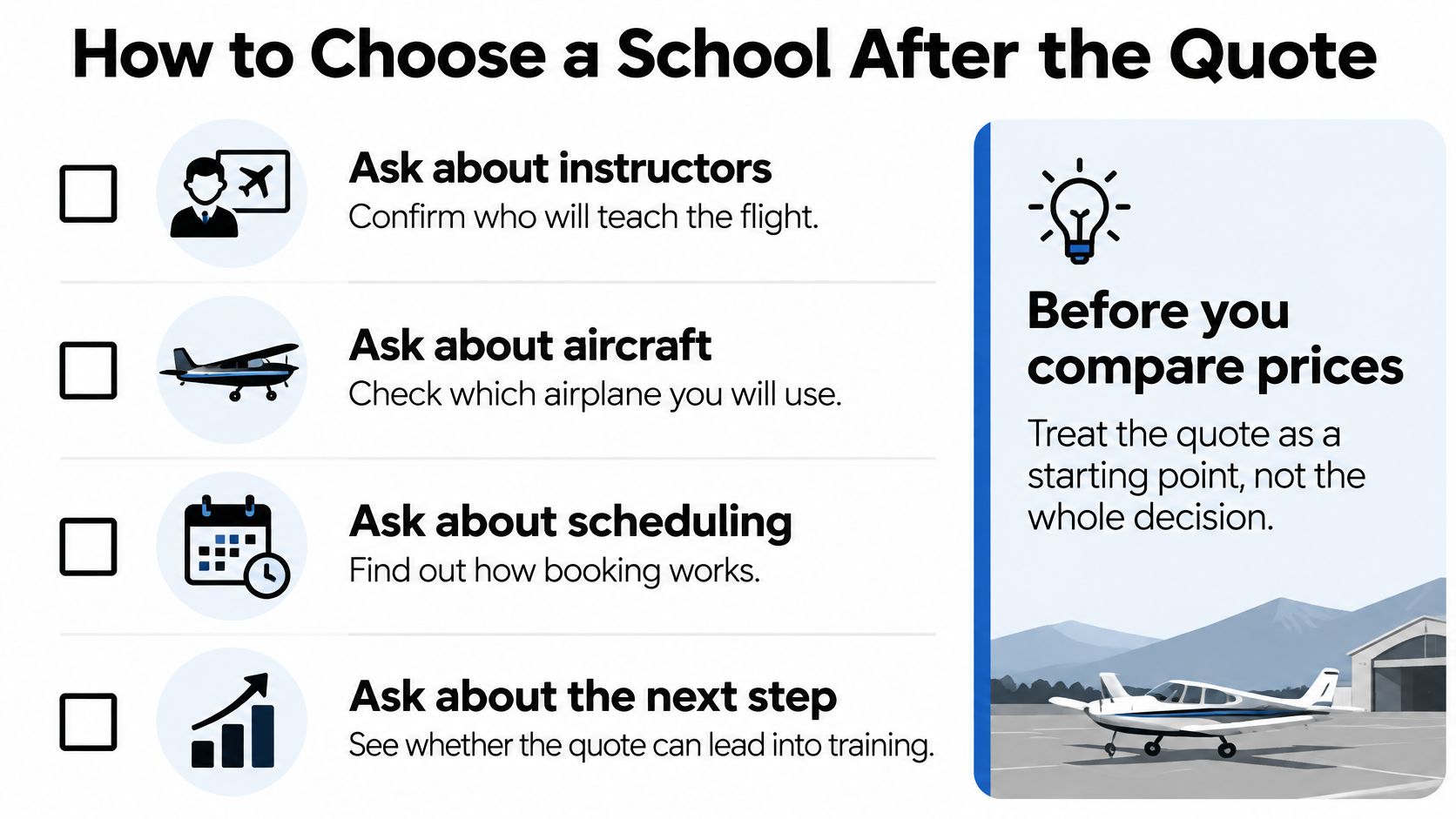
We recommend asking every school, including ours, the same practical questions. Record the answers side by side rather than relying on the general impression you get during a tour.
| Ask about | What you're trying to understand |
|---|---|
| Airplane age | Which aircraft you'll actually use, not merely what appears in advertising |
| Students per airplane | How demand may affect access to suitable bookings |
| Instructor turnover | How the school handles continuity when an instructor leaves |
| Total price in writing | What the agreement includes and excludes |
| Part 61 versus Part 141 | Which training structure applies to your proposed course |
| Flying before committing | Whether you can experience instruction before a larger decision |
An introductory aircraft that you won't use again may provide a limited preview. Similarly, an engaging instructor doesn't establish who will teach your subsequent lessons.
These aren't reasons to reject a school automatically. They're reasons to request specific answers. Our guide to how to choose a flight school provides a framework for that conversation.
Treat the first flight as a chance to evaluate the school, not as an obligation to enroll.
Keep the local lesson separate from the career program
We offer discovery flights and private-pilot lessons from John Wayne Airport in Santa Ana, so Orange County students can fly from their own side of the hills. The introduction is a first lesson with an instructor before any larger commitment.
For students considering a full zero-time pathway, our Career Track has fixed $89,000 tuition, takes about nine months from zero time to CFII and multi-engine, and includes 282 total hours and six certificates and ratings. It's based in Southern California, in Riverside, Long Beach, and Corona.
Those program facts belong in a separate written-price discussion. They aren't conclusions you need to reach before you've tried the first lesson.
Questions Worth Asking Before You Pay
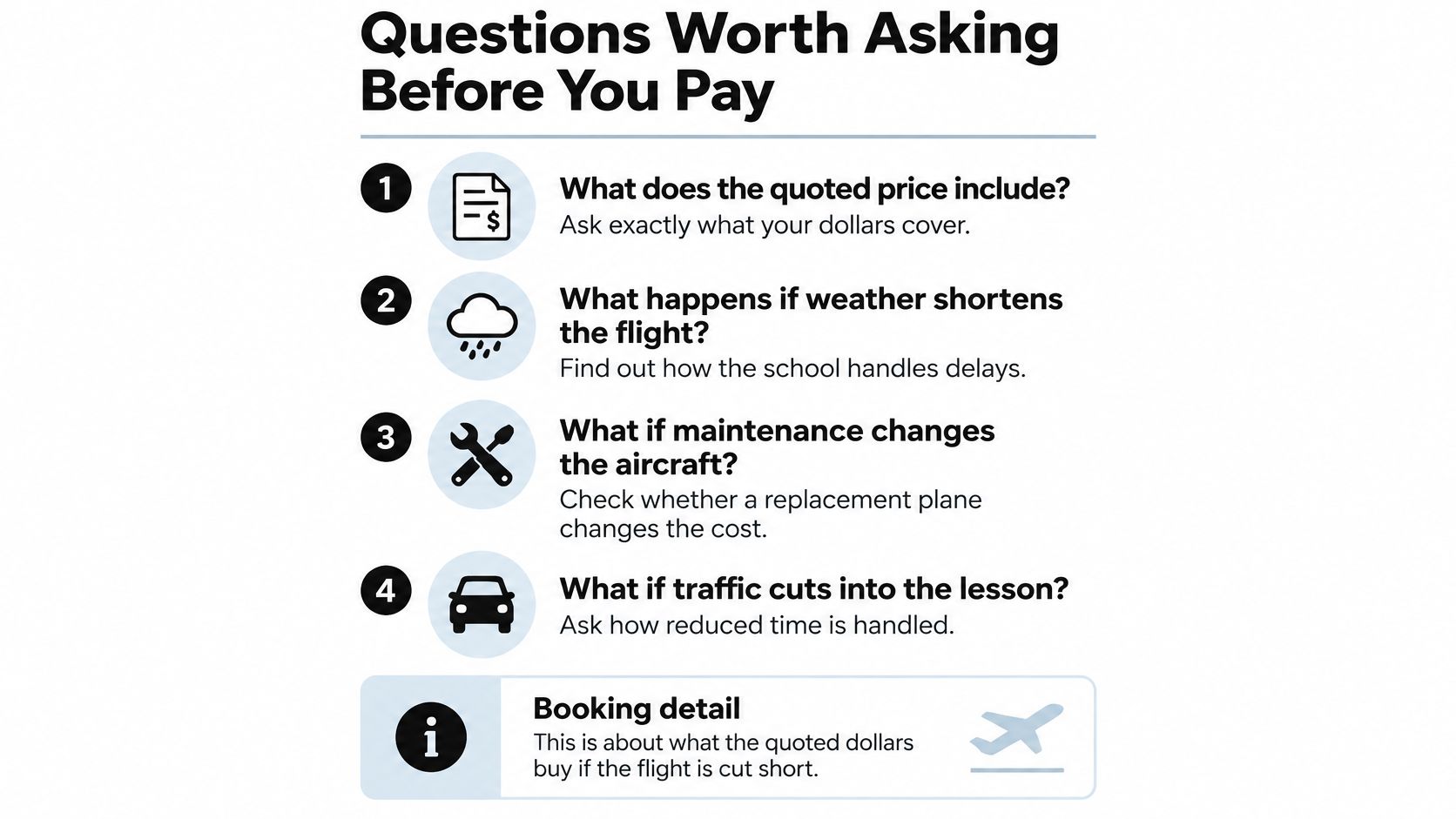
A quoted price only helps if you know what the clock measures. Before paying, check how much time is spent flying, what happens if the lesson changes, and whether the flight is recorded as dual instruction.
Send a clear booking checklist
Ask the school to separate aircraft time, instructor time, ground briefing, and optional charges. The details help you compare what each quote includes.
- Clock definition: Does the advertised duration mean airborne time, aircraft operating time, or the whole appointment?
- Reduced flight: If weather or traffic shortens the airborne portion, is there a minimum flying-time policy, credit, refund, or rescheduling option?
- Aircraft substitution: If maintenance changes the assigned airplane, does the price or lesson change?
- Instruction record: Will the instructor log the session as dual instruction, and how can it count toward later training?
- Extras: Are passengers, taxes, booking charges, or other additions outside the quote?
- Cancellation: What happens if you cancel, and what happens if the school cancels?
Get the answers in writing. A friendly conversation does not define the cancellation or refund terms.
Use the flight to reduce training uncertainty
A discovery flight is a bundled first lesson, not just an airborne fare. Its value depends on the minutes you spend flying, the aircraft used, and whether the instructor records the time as dual instruction that can count toward later training. A shorter flight with useful instruction may tell you more than a longer ride with little teaching.
Before enrolling in further training, request a written estimate that explains the expected hours and what the price covers. Plan for training hours, examiner fees, written tests, and the checkride in addition to the ratings tuition you are quoted.
The 40-hour FAA minimum for the private certificate is an eligibility floor, not a budget estimate, so ask the school for its expected total hours in writing. Also ask about ongoing rates, payment flexibility, stage checks, checkrides, and curriculum expectations. Those details help explain how the initial lesson connects to the larger training commitment.
If you already fly, tell us what you have done so the lesson can focus on what is new to you.
Before paying: An all-in price still needs a clear definition of what starts and stops the clock.
You don't need to decide your entire aviation future when booking. You do need to understand what you're purchasing and what happens if weather, maintenance, or another change affects the lesson.
Your Next Step After the Discovery Flight
A discovery flight costs $200 at CFII. That price covers a one-hour first lesson from John Wayne Airport, with an instructor and no experience required. You meet the instructor, walk around the airplane together, and take the controls in the air. The lesson gives you a real sample of learning to fly, rather than only a view from the passenger seat.
The useful value depends on what happens during that hour: how much time you spend airborne, which aircraft you fly, and whether the flight time is logged as dual instruction. Those details help explain what the quoted price includes.
Decide what the lesson showed you
After landing, consider the teaching as well as the flight. Did the instructor explain each task clearly, invite questions, and help you understand what you were doing? Your first attempts do not need to be polished. For someone with no flight time, the key is whether you want to keep learning.
- Instruction fit: Could you follow the explanations, and did you feel comfortable asking for clarification?
- Training interest: Did learning to operate the airplane appeal to you, beyond being airborne?
- Next-step clarity: Can you say what you would book next and what it would cost?
If you want to begin gradually, private flight lessons can be a way to continue after the introduction. There is no need to choose an accelerated path to benefit from a first lesson.
Make the next commitment deliberately
If you have not flown yet, check the discovery-flight booking information and confirm the duration and inclusions before choosing a time. Pay attention to the instructor and aircraft you will fly, not just the headline price.
Before you book any second lesson, write down its length, aircraft model, and price in one line. That gives you a clear basis for comparing it with your first lesson.
If you already know you want the full zero-to-instructor path, compare the written price, hours, and certificates of any full program before committing to a longer agreement.
Solo flying comes later, with its own eligibility and training requirements. A third-class FAA medical certificate is required before flying solo, but you can take the discovery flight and first lessons before obtaining one.
CFII's one-hour discovery flight costs $200 and requires no experience. Visit CFII for booking details, then decide whether you want to continue with another lesson.
Planning to fly for a living?
See what the path from zero to a pilot career looks like, what it costs and how long it takes.
Learn to fly in Riverside
We train at Riverside Municipal Airport in modern airplanes with a parachute built in. Start with a one hour discovery flight, no experience needed.