On this page
- What Flying Lessons Actually Are and Who They Are For
- Three Kinds of Students, Three Different Plans
- The Certificate Ladder from Student to Airline Pilot
- The Early Rungs
- The Professional Rungs
- Realistic Costs and Financing Options for Flying Lessons
- Three Budgets to Stress Test
- How to Pay Without Trapping Yourself
- Choosing a Flight School Without Regretting It
- Score These Items on Your Visit
- What a Week of Flying Lessons Actually Looks Like
- Ground, Simulator, and Aircraft Do Different Jobs
- Time Building and the Road to the Airlines
- Your Main Time Building Options
- Housing, Relocation, and Your First 90 Days
- Your Enrollment Checklist
You're probably looking at flight school websites late at night, comparing prices that don't seem to compare, timelines that sound too clean, and jobs you could leave if the plan worked. You haven't logged an hour yet, or you've taken one introductory flight and can't stop thinking about it. That's exactly where most of my students started.
Don't buy a syllabus first. Buy clarity first. You need to know what flying lessons count toward, what they'll really cost if you're delayed, and what decision in your first month can ultimately add months later. Get those three things right and training becomes hard work, not a gamble.
What Flying Lessons Actually Are and Who They Are For
A typical first student walks in nervous, signs a rental form, shakes an instructor's hand, and expects the lesson to be mostly flying around. Ten minutes later they're learning a preflight inspection, fuel sampling, checklists, and why the instructor keeps asking what they'll do if the engine quits. That surprise is normal. Flying lessons aren't joyrides with tips. They're structured training toward an FAA certificate, with ground knowledge, supervised flight, stage checks, written tests, and a practical test at the end.
That structure serves different people differently, and you should decide which one you are before you pay.
Three Kinds of Students, Three Different Plans
- Recreational learner: You want to fly yourself and maybe a passenger on nice days. A private certificate may be more than enough, and pace matters less than enjoyment and safety.
- Private pilot with purpose: You want personal travel, family trips, and real utility. You'll care about weather judgment, cross-country planning, and staying proficient after the checkride.
- Career-track trainee: You want to be paid to fly. Every lesson should build toward instrument, commercial, and instructor credentials without wasted hours that don't satisfy a specific requirement.
You're not entering a tiny hobby. The FAA reported 848,770 active airman certificates as of December 31, 2024, and student pilot certificates rose from 316,470 to 345,495 in one year, according to the FAA airman statistics for 2024. Students represented a large share of that total, which means schools, instructors, and examiners are serving a growing pipeline, not a shrinking one.
If you've never sat in the left seat, don't enroll blind. Book a discovery flight and pay attention to more than the view. Notice workload, radio chatter, motion, and whether you want to study after you land. Then read up on the entry document itself through this guide to the student pilot certificate.
If you leave a first flight only wanting photos, rent occasionally. If you leave wanting to understand the checklist, you're ready to train.
The Certificate Ladder from Student to Airline Pilot
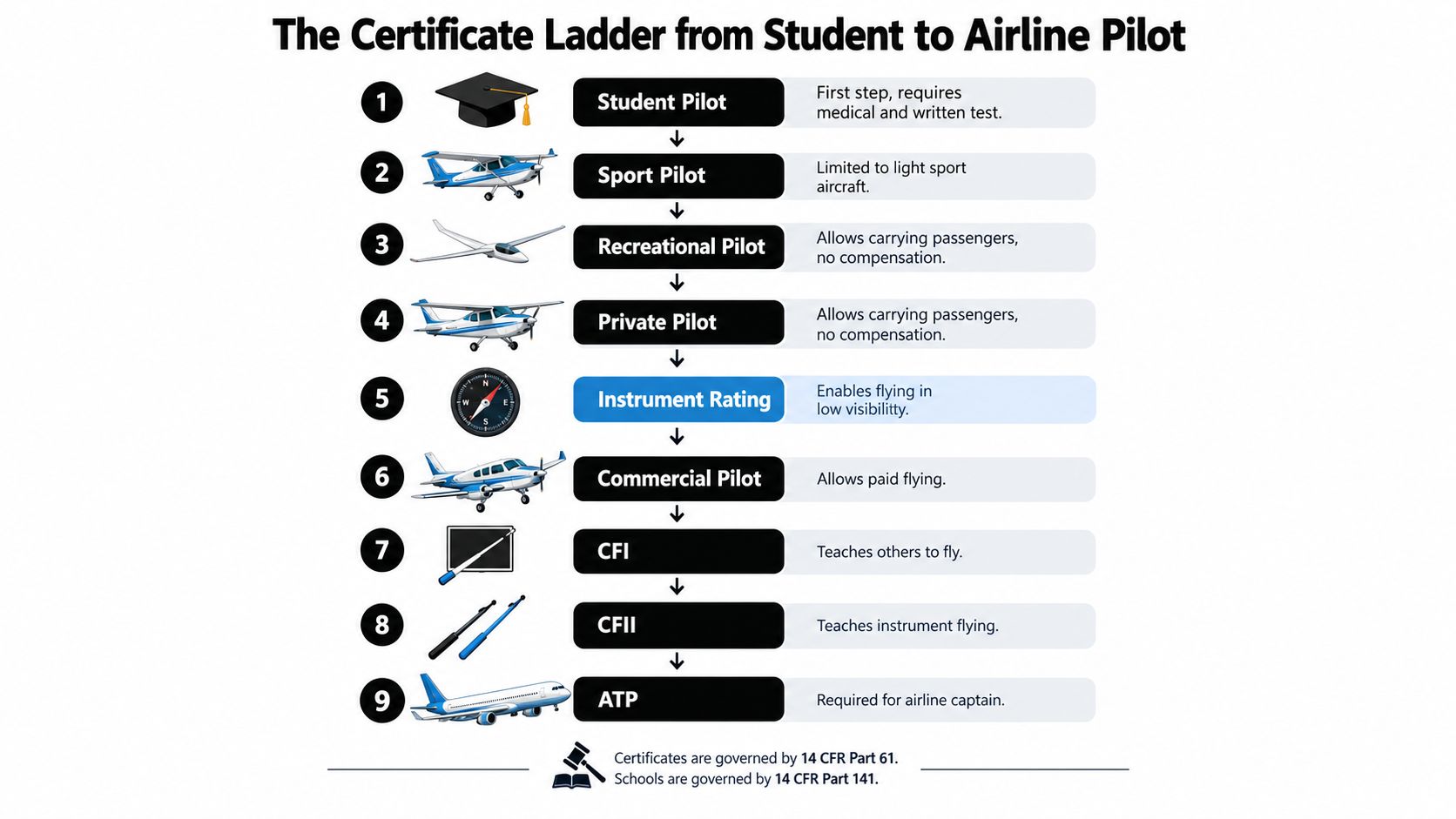
Think in rungs, not in a single license. Each certificate or rating grants a specific privilege, and skipping the logic behind the order causes students to log expensive hours that don't move them forward.
The Early Rungs
Student pilot is your entry point. Under 14 CFR §61.83 eligibility rules summarized by the FAA, an airplane student must be at least 16 years old and able to read, speak, write, and understand English. You can start lessons before solo, but you can't solo until you hold the student certificate and required medical and your instructor endorses you.
Sport and recreational certificates sit below private in scope. They can suit limited personal flying, but they're usually a detour for career students. If your goal is paid flying, don't collect a restricted credential just because it looks faster.
Private pilot is the first full milestone. You can carry passengers and fly for personal reasons, but you can't be paid to fly. At this point, airmanship, navigation, weather decisions, and landings have to become reliable, not lucky.
The Professional Rungs
Instrument rating teaches flight by reference to instruments, procedures, holds, approaches, and workload management when you can't rely on the horizon. For a career pilot, this isn't optional polish. It's core professional competence.
Commercial pilot lets you fly for compensation or hire within the applicable rules. The training is more demanding than many students expect. Under 14 CFR §61.129 commercial pilot aeronautical experience, you need 20 hours of training in the commercial areas of operation, including 10 hours of instrument training covering attitude instrument flying, partial panel operations, unusual attitude recovery, and intercepting and tracking navigation systems.
CFI and CFII turn you into a teacher, first for basic flight instruction and then for instrument instruction. ATP, or airline transport pilot, is the airline level credential. Medical class tracks the job too. The FAA medical examination guidance links first class generally with ATP privileges, second class with commercial, and third class with student, recreational, and private flying. If airlines are your goal, address the higher medical early, before you've spent heavily.
For a deeper walk through sequencing, see this overview of pilot certification training. My recommendation is blunt. Career students should plan private, instrument, commercial, CFI, and CFII as one connected project from day one.
Realistic Costs and Financing Options for Flying Lessons
The advertised hourly rate is not your cost. Your cost is aircraft time, instructor time, ground study, testing, gear, repeats, delays, commuting, and the months you're not earning in another job. Students who budget only for the brochure number run out of money at the worst moment, right before a checkride.
AOPA puts private pilot training at $6,000 to $20,000 or more and notes most students exceed the 40 hour FAA minimum, commonly finishing around 50 to 70 hours, in its pilot license cost guide. That range is wide for a reason. Frequency matters. Fly rarely and you'll spend paid time relearning what faded since last week.
Three Budgets to Stress Test
| Scenario | Flight hours | Cash needed | Timeline |
|---|---|---|---|
| On track | Near the typical finish range | Within your planned training budget, plus testing and gear | Steady weekly progress |
| Delayed two months | Extra refresher and repeat lessons | Higher aircraft and instructor spend, plus living costs for added months | Checkride and later ratings pushed back |
| Financed | Same training hours, paid over time | Tuition plus interest and any excluded fees | Payments continue whether weather cooperates or not |
Build those three versions before you sign anything. Separate tuition from examiner and testing fees, books, headset, renter's insurance, and simulator time, because schools bundle those items differently. Ask what's excluded in writing. Ask what happens after a failed stage check. Ask who pays for retraining.
Practical rule: If your plan only works when nothing slips, you don't have a plan. You have a hope with a loan attached.
How to Pay Without Trapping Yourself
Pay as you go preserves flexibility but can stretch training and raise total hours through skill decay. A fixed price program can reduce uncertainty, but only if inclusions, exclusions, refund terms, and repeat training policy are explicit. Credit cards are the worst default for large training balances because interest punishes every delay. A personal loan may be simpler, but compare total repayment, not monthly payment. An aviation focused lender with deferred payments can help cash flow during full time training, yet deferral isn't forgiveness. Interest still has a cost.
Read the mechanics in this guide on how to pay for flight school, then run your own monthly number. Include rent, food, transport, and a reserve for a delayed checkride. If a two month slip breaks you financially, delay enrollment and build the reserve first. That's not quitting. That's protecting the training you've already paid for.
Choosing a Flight School Without Regretting It
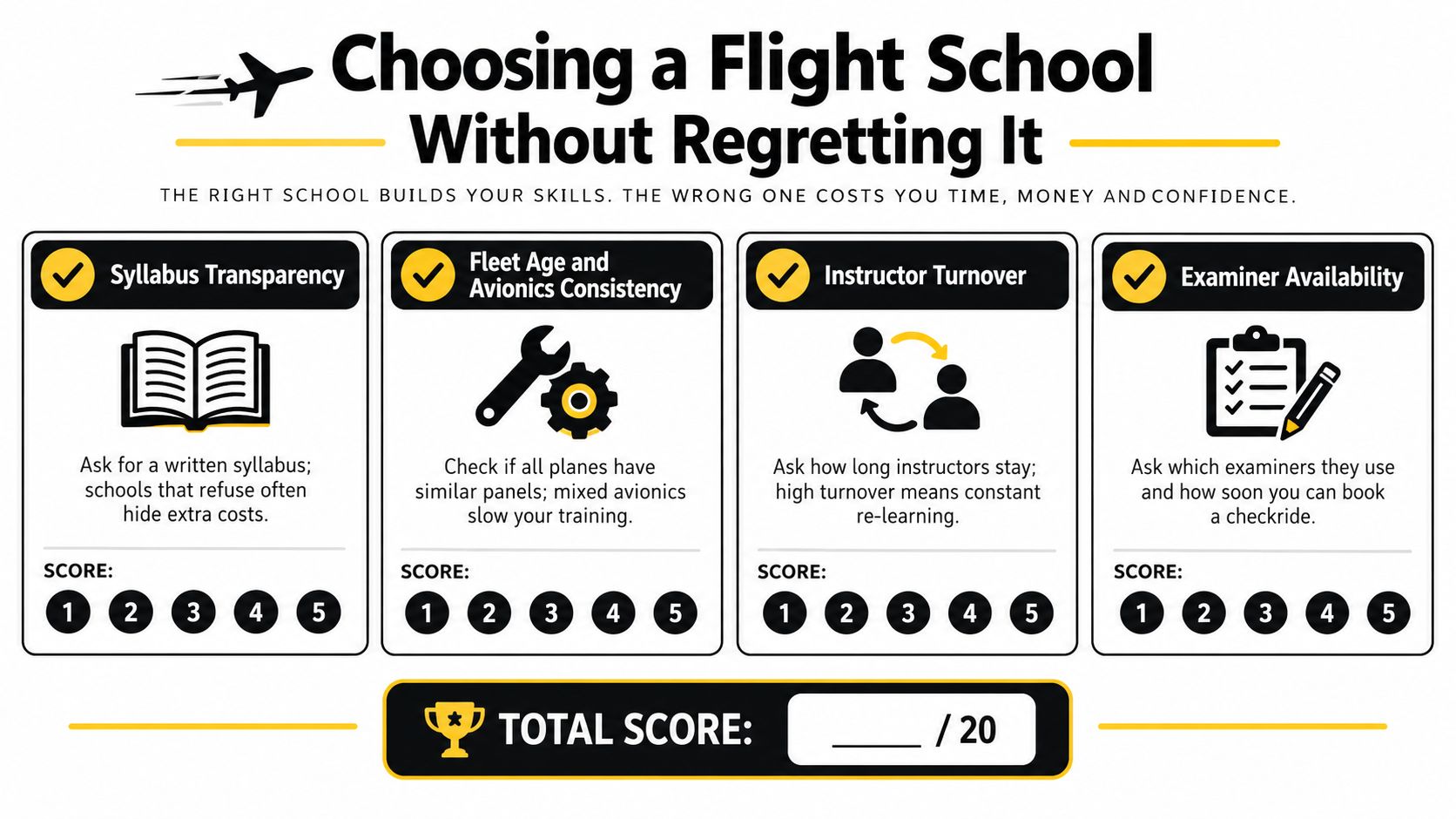
Don't choose a school because the front desk was friendly or the airplane looked new in a photo. Score it. You're buying a system for producing a safe, test ready pilot on a predictable schedule. Weak systems hide behind enthusiasm.
Score These Items on Your Visit
- Syllabus transparency: Ask for the written syllabus, stage checks, and completion standards. If staff can't show you what lesson twelve builds on, walk away.
- Fleet and avionics consistency: Look at maintenance status, dispatch reliability, and whether cockpits match. Switching panels every flight slows beginners down.
- Instructor stability: Ask how often students change instructors and how records transfer. Every handoff costs you a lesson proving what you already know.
- Examiner scheduling: Ask which designated pilot examiners the school uses, when booking starts, and what students do while waiting.
- Disclosure: Get exclusions, cancellation rules, refund terms, and repeat lesson policy in writing before a deposit.
Examiner access deserves the highest weight. A 2025 Embry-Riddle study reported an average checkride wait of five weeks among responding flight schools, with 91% identifying checkride availability as an operational problem, according to the Embry-Riddle checkride availability study. You can finish your lessons and still sit idle, losing proficiency while housing and loan costs continue.
Ask the school for outcomes you can verify in conversation, not slogans. What's the typical gap between stage completion and checkride? What happens if weather cancels the test? Do waiting students keep flying a structured proficiency plan or just burn rental time?
Training structure also matters. Compare regulatory frameworks using this explanation of Part 61 vs Part 141, then judge the actual school in front of you. A good Part 61 operation with a disciplined syllabus beats a disorganized school hiding behind a label. My ranking is simple. Examiner access first, syllabus and instructor continuity second, fleet consistency third, price last. Cheap training that stalls isn't cheap.
What a Week of Flying Lessons Actually Looks Like
On Monday you're in ground school learning airspace and weather, wondering why a chart has so many colors. On Tuesday you're preflighting in the morning cool, listening to automated weather, making your first shaky radio call, and trying to taxi on the centerline. By Friday you're tired in a way desk work doesn't produce. That's a real training week.
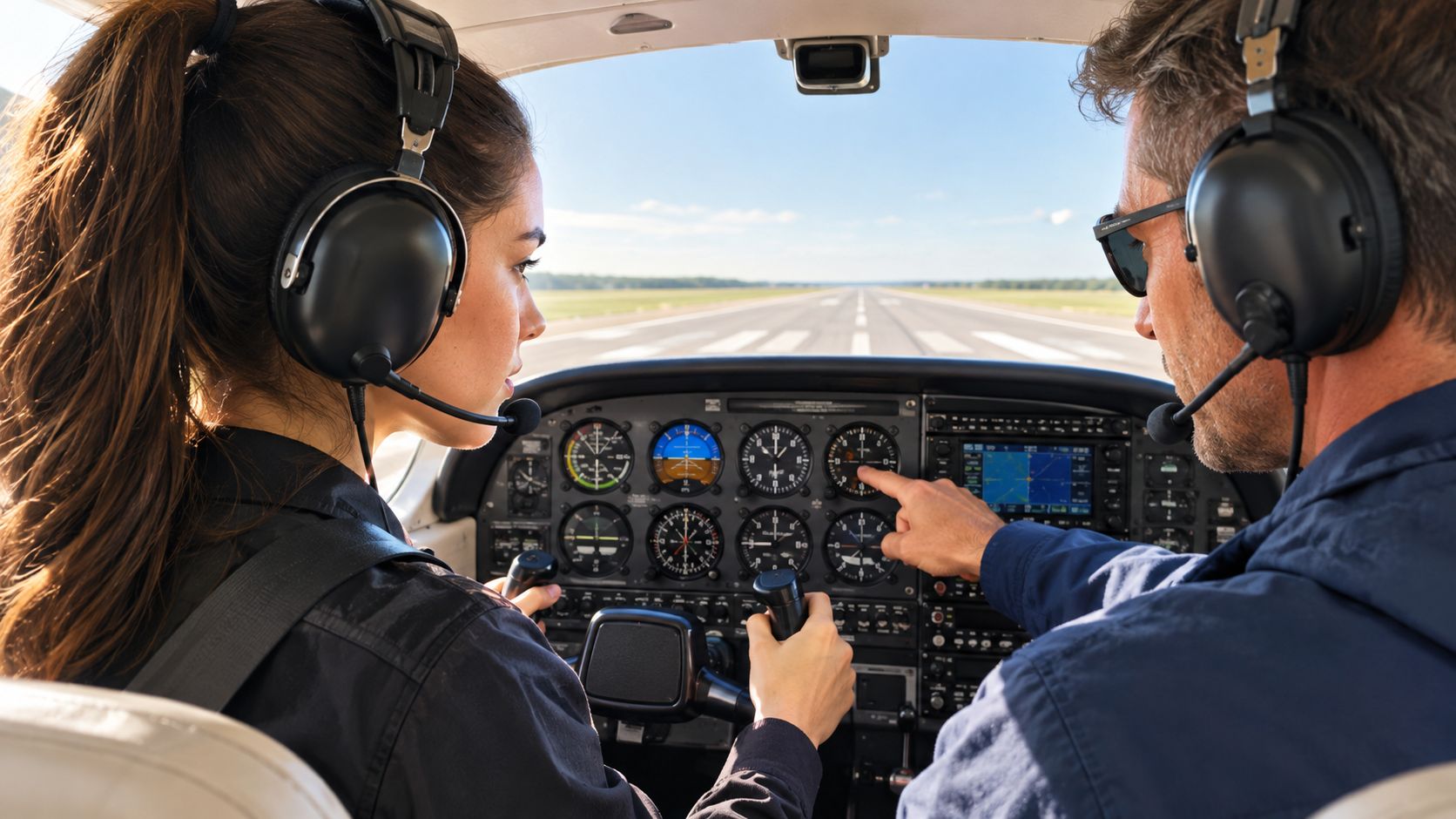
This cockpit briefing image captures the part beginners underestimate, the methodical preparation before the engine starts.
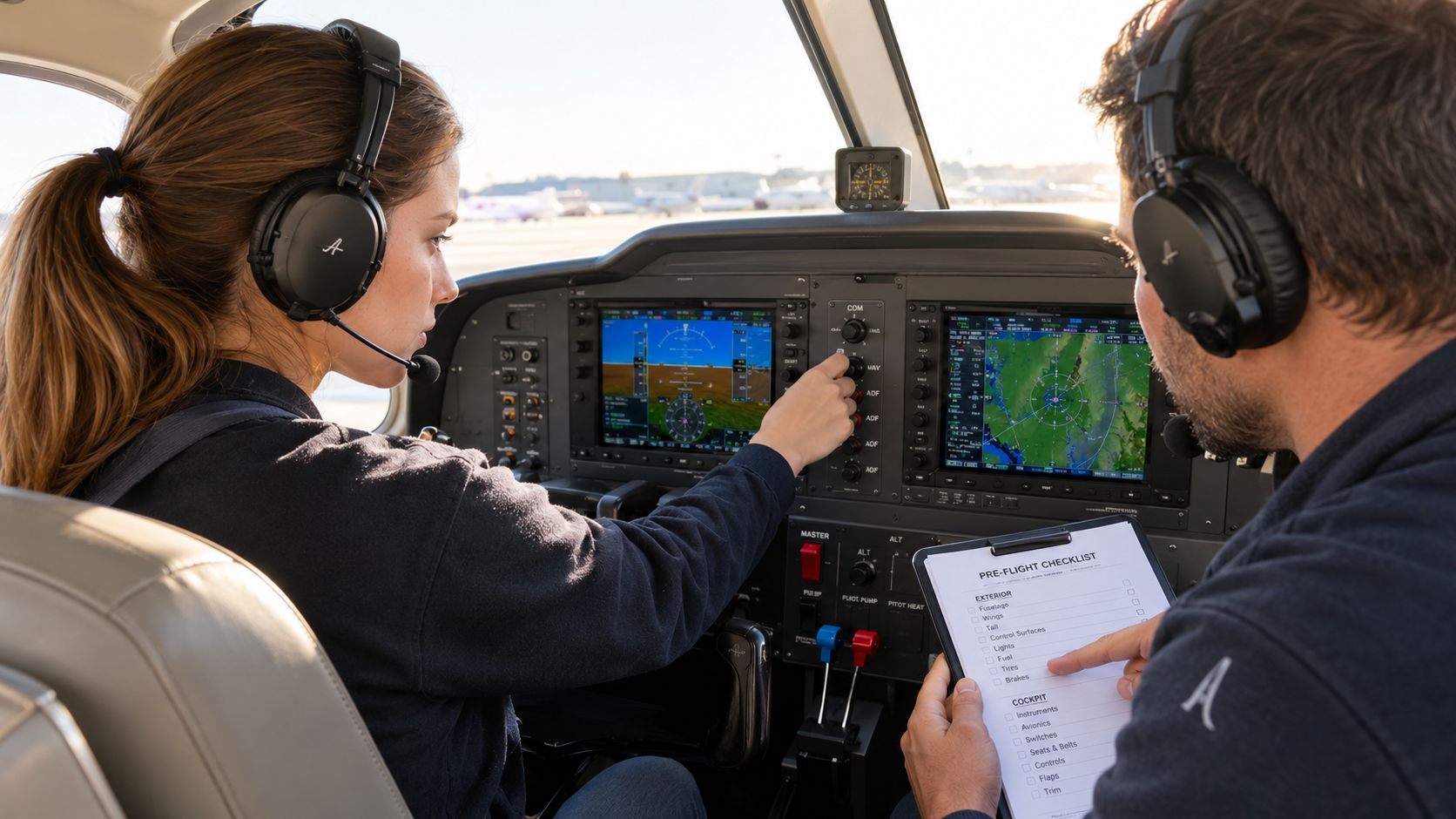
Early flight blocks focus on straight and level flight, climbs, descents, turns, slow flight, stalls, and pattern work. Your instructor talks, demonstrates, then lets you make controlled mistakes. You'll overcontrol. You'll forget a checklist item. You'll fixate inside the cockpit when you should look outside. Debriefing turns that mess into the next lesson's objective, and chair flying at home makes the next flight cheaper.
Ground, Simulator, and Aircraft Do Different Jobs
Ground lessons build the knowledge you need for oral questioning and real decisions. Simulator sessions let you repeat procedures, navigation intercepts, failures, and cockpit flows without weather or aircraft availability stopping you. Aircraft lessons give you real wind, traffic, radio congestion, and physical cues no device fully copies.
Don't assume simulator time automatically counts. FAA guidance says an approved device's Letter of Authorization controls which maneuvers and how much time may be credited, and training must come from an authorized instructor, per the FAA simulator time credit guidance. Verify the device approval before you count hours toward a certificate.
This video walkthrough helps you picture how a lesson flows from briefing to debrief before your first week begins.
Solo isn't scheduled by a magic lesson number. Your instructor must judge that you can handle takeoffs and landings, control the aircraft, and exercise good judgment, and the certificate and medical requirements covered earlier must be in place first. Get paperwork done early so skill, not administration, decides your solo date.
Time Building and the Road to the Airlines
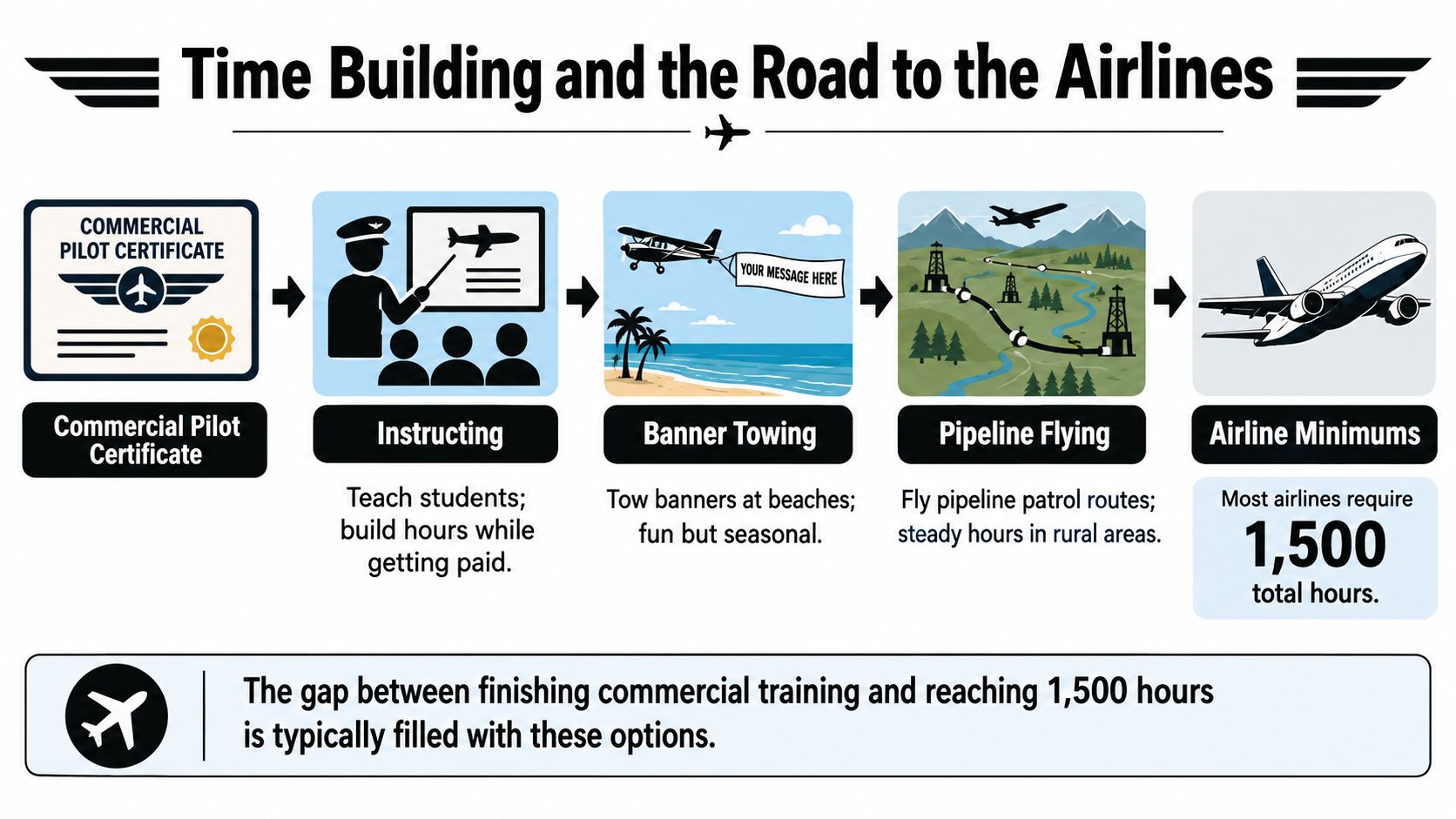
Finishing commercial training doesn't make you airline eligible. It makes you employable in entry level flying and leaves a large experience gap to fill before ATP level work. Students who don't plan that gap at enrollment often finish their certificates, run low on money, and drift into whatever flying appears first.
Your Main Time Building Options
Flight instructing is the most structured route for most new commercial pilots. You teach, get paid to fly, deepen your knowledge, and log time in a training environment airlines understand. It also exposes you to student mistakes you must catch early, which sharpens judgment fast.
Banner towing can build stick and rudder skill and seasonal hours, but work may be weather and location dependent. Pipeline patrol and similar survey flying can provide steady routes and repetitive operational experience, often away from major cities. Charter and cargo opportunities may appear later, but don't build your financial plan on landing one immediately after commercial.
Judge each option by four things. How soon can you start? How consistently will you fly? Does the work build relevant experience, including cross country, night, instrument, and multi engine time where required? Can you live on the pay without pausing your progress?
Don't just count total hours in a program brochure. Ask which hours satisfy which regulatory requirement, in which aircraft, with which instructor, and in what sequence.
For readers who want training and the instructor route planned as one path, CFII offers a Career Track that runs about nine months from zero time to CFII and multi-engine at a fixed $89,000 tuition, totaling 282 hours across 204 single-engine, 25 multi-engine, and 53 simulator hours, covering six certificates and ratings, based in Southern California (Riverside, Long Beach, Corona). Treat that as one structured option to evaluate against the scoring criteria above, not as a promise of a job. No school can guarantee airline hiring, and you should distrust any pitch that implies otherwise.
Your goal after commercial is not just more hours. It's useful, well documented, progressively responsible hours that keep you current, safe, and moving toward ATP eligibility without a long unpaid gap.
Housing, Relocation, and Your First 90 Days
Relocation is a training decision. Weather determines how often you fly. Airspace determines how much radio and traffic workload you absorb. Distance to the airport determines whether a cancelled morning lesson becomes a useful study block or a wasted commute. Pick a location that lets you train frequently, not one that merely looks appealing.
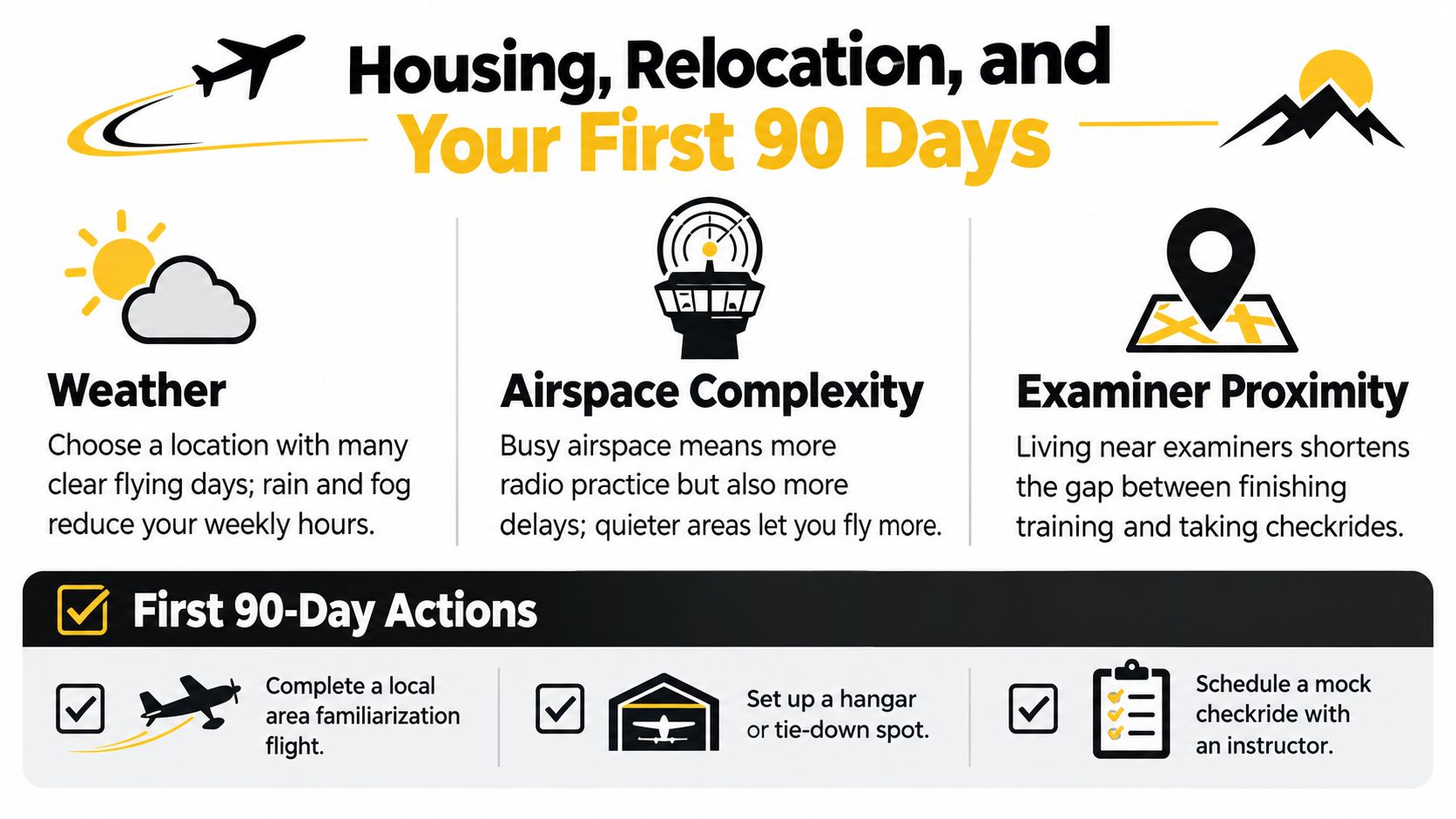
Busy airspace teaches discipline, but constant delays can eat lesson time. Quiet airspace gives reps, but may leave you underprepared for complex operations. The right balance depends on your stage and goals, so ask how a school sequences local practice areas, towered operations, and cross country routes.
If you're moving for full time training, look closely at student housing options near the base, commute time, roommate expectations, and whether you can study and sleep properly. Fatigue is a training cost. So is a long drive after an early report time.
Your Enrollment Checklist
- Medical first: Confirm eligibility for the privilege level you ultimately want.
- Paperwork ready: Student certificate process started before solo becomes urgent.
- Written answers: Syllabus, exclusions, refund policy, examiner process, and repeat training terms documented.
- Cash reserve: Living costs covered beyond the advertised finish date.
- Weekly rhythm: Flight, ground, simulator, study, and rest blocked like a job.
In your first ninety days, protect consistency above intensity. Show up prepared, debrief thoroughly, and fix weak knowledge before it becomes a failed stage check. Students who treat training like employment finish stronger than talented students who train in bursts.
If you're serious about going from zero time to instructor credentials on a fixed, structured plan, CFII trains career students full time in Southern California through private, instrument, commercial, multi-engine, CFI, and CFII. Start by reviewing the program details, costs, and next steps at CFII and book a conversation before you commit your money or quit your job.
Planning to fly for a living?
See what the path from zero to a pilot career looks like, what it costs and how long it takes.
Learn to fly in Riverside
We train at Riverside Municipal Airport in factory-new airplanes with a parachute built in. Start with a one hour discovery flight, no experience needed.