On this page
- What to Expect When You Start Flight Training
- The sequence matters
- How to Choose the Right Flight School
- Look for retention infrastructure
- What Flight Training Actually Costs Beyond the Hourly Rate
- Budget for delays, not an ideal schedule
- Your First Few Lessons and What Actually Happens
- Expect repetition before confidence
- Why Students Quit and How to Stay on Track
- Build a recovery plan before you need one
- Next Steps to Begin Your Flight Training Journey
- Use a one-week decision process
Most students need 60 to 75 flight hours to earn a private pilot certificate, not the FAA minimum of 40 hours. Treat those 60 to 75 hours as a planning baseline, because weather, aircraft access, instructor continuity, learning pace, and checkride readiness can all extend the journey.
You may be looking at a discovery flight, comparing schools, or wondering whether a private pilot certificate can fit around work and family. The excitement is real, but successful flight training for beginners depends less on romance or raw motivation than on choosing a system that keeps you studying, flying, reviewing, and returning after setbacks.
The practical question isn't only, “How quickly can I get licensed?” It's, “What structure will help me keep training consistently enough to finish?”
What to Expect When You Start Flight Training
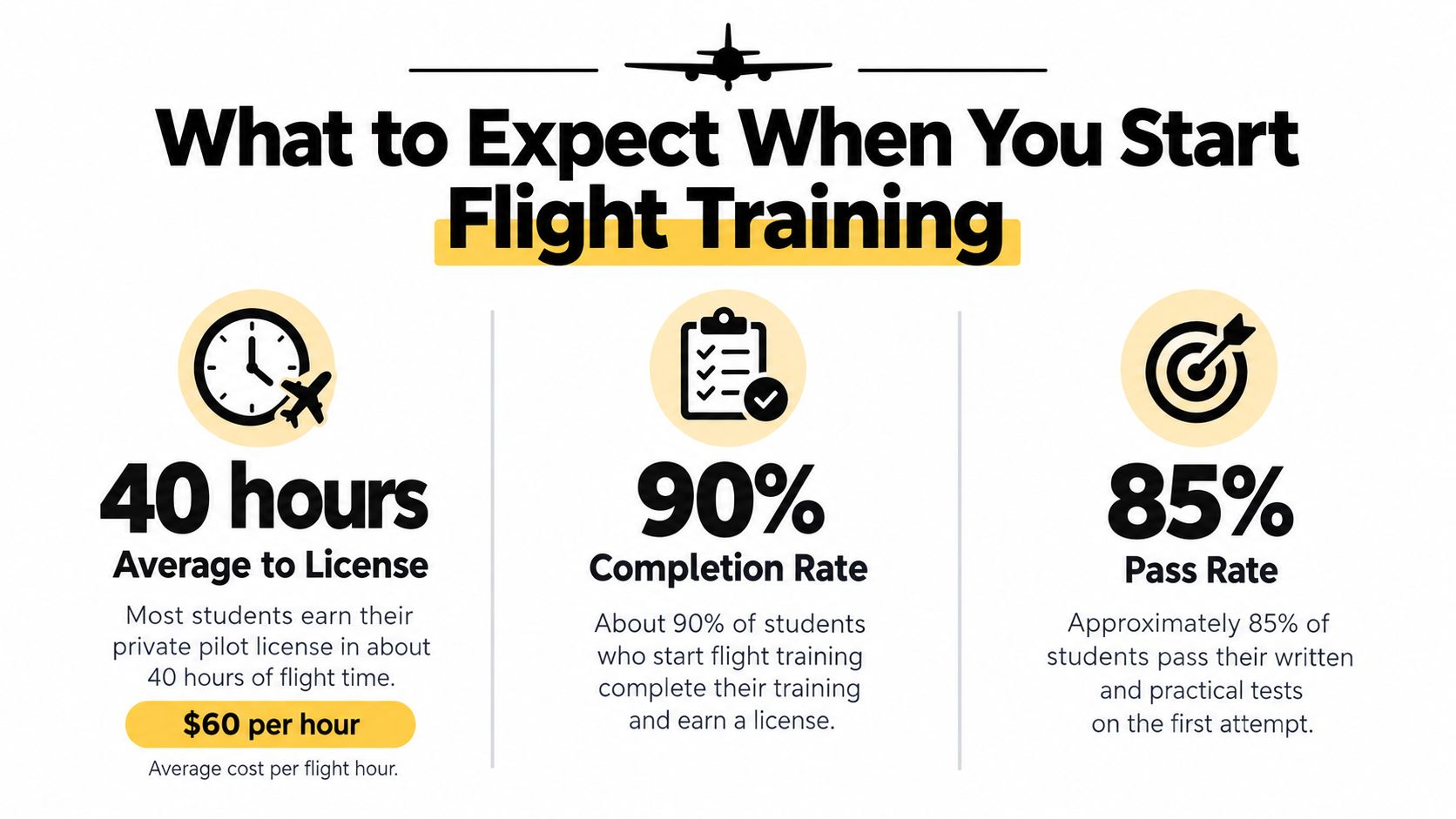
The FAA's regulatory floor for an airplane private pilot certificate is 40 logged flight hours, including at least 20 hours with an authorized instructor and 10 hours of solo flight training. The curriculum also includes at least 3 hours of cross-country flight, 3 hours of night flight, and 3 hours of instrument training, alongside other category- and class-specific requirements, as described in the FAA's private-pilot hour requirements.
That minimum is a compliance threshold, not a reliable forecast. The FAA notes that learners typically require approximately 60 to 75 hours, while its broader FAQ gives an average of about 75 hours for people without a hearing impairment who complete private-pilot certification requirements. An approved pilot school can reduce the regulatory minimum to 35 hours, but that lower floor doesn't mean most students finish there.
The sequence matters
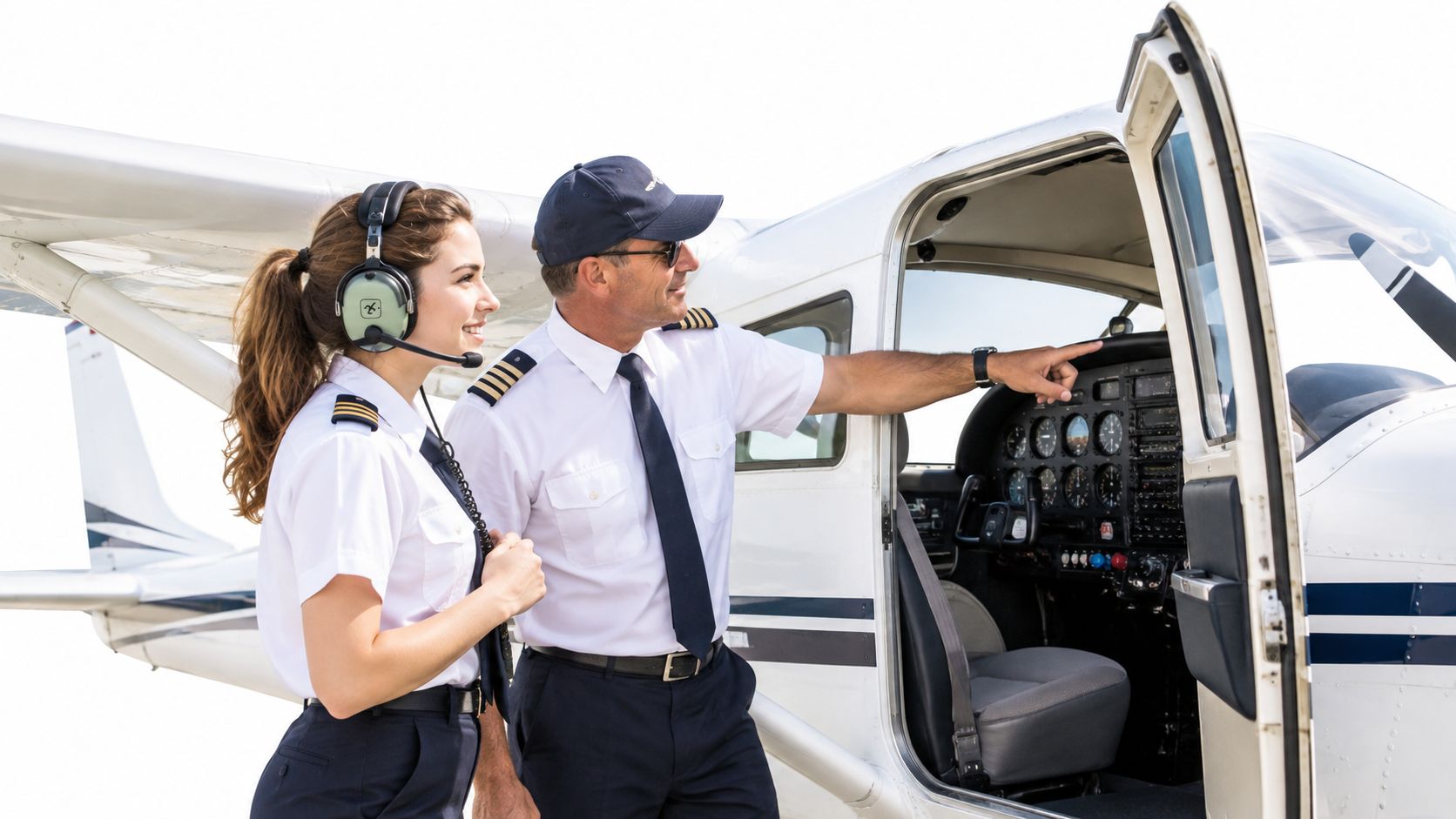
Your first lessons usually combine ground preparation with supervised aircraft work. You'll learn preflight inspection, checklist discipline, aircraft controls, normal operations, radio procedures, and basic airport routines before progressing toward takeoffs, landings, emergency procedures, navigation, night operations, and solo preparation.
Before a first solo, student pilots must receive and log stall and stall-recovery training under the applicable FAA rules in 14 CFR Part 61, Subpart E. A good instructor won't treat solo as a calendar event. They'll look for repeatable aircraft control, sound traffic-pattern judgment, accurate checklist use, and the ability to make safe decisions without constant prompting.
Weather cancellations and maintenance interruptions are normal planning variables. So are lessons where a maneuver that felt stable one day needs more work the next. Keep a written go/no-go process, establish personal minimums with your instructor, and record one technical correction and one risk-management lesson after every flight. That habit turns scattered lessons into a training system.
How to Choose the Right Flight School
A polished aircraft fleet can attract beginners, but operational reliability usually matters more than appearance. A school with attractive airplanes still becomes a poor choice if aircraft are frequently unavailable, instructors change without explanation, or nobody can tell you what you must demonstrate before the next stage.
Compare schools using questions that expose how training operates:
- Instructor continuity: Who will teach you, and what happens when that instructor is unavailable?
- Aircraft access: How are maintenance, weather cancellations, and booking conflicts handled?
- Progress measurement: Does the school use stage checks, written standards, and documented performance reviews?
- Scheduling: Can the school support your realistic weekly availability rather than an idealized calendar?
- Testing support: Who coordinates written exams, practical-test preparation, and examiner scheduling?
Look for retention infrastructure
A flexible Part 61 arrangement may suit someone balancing work or family responsibilities. A more structured approved-school environment may provide stronger curriculum control. Neither format automatically guarantees completion. The useful comparison is whether the program gives you a clear syllabus, regular feedback, dependable scheduling, and a way to recover after interruptions.
Practical rule: Choose the school that can explain how it prevents students from disappearing between lessons.
Airport environment also creates a trade-off. A busy urban airport can develop radio discipline and traffic awareness in complex operations, while a smaller airport may offer simpler access and fewer scheduling obstacles. The right choice depends on whether the school can provide a sustainable mix of challenge and repetition without turning every lesson into an availability problem.
Use the CFII guide to flight training courses as one comparison point, then visit local schools in person. Ask to see a sample syllabus, a sample progress record, the aircraft booking process, and the written terms for refunds, pauses, retests, simulator use, and other exclusions. A transparent program is easier to budget and easier to hold accountable.
What Flight Training Actually Costs Beyond the Hourly Rate
A beginner often starts by comparing hourly rates. Then the first detailed quote shows why students get caught off guard. Aircraft and instructor time are only the base layer. Ground instruction, simulator sessions, knowledge test prep, practical test fees, materials, transportation, and extra training after a weak lesson or evaluation can all push the total higher.
A quote is only useful if it answers three questions clearly:
- What is included? Confirm whether aircraft time, instructor time, ground lessons, study materials, stage checks, and checkride coordination are part of the price.
- What is excluded? Look for retests, extra flight time, examiner charges, supplies, housing, and cancellation terms.
- What changes the total? Weather delays, maintenance, uneven attendance, and extra practice all raise the final cost.
Many beginners make a bad comparison at this stage. One school may advertise a lower hourly rate, then bill separately for ground instruction or for support a student assumed was built into training. That pricing model is legal, but it makes direct comparison difficult. A fixed price program can reduce surprises if the inclusions and exclusions are written plainly. It still does not cover every personal expense, and it does not mean every student will finish in the same amount of training.
Budget for delays, not an ideal schedule
Students who stay on track usually budget for interruptions from the start. Build room for cancelled lessons, extra preparation, and retesting instead of planning around the FAA minimum alone. If you need to borrow, compare aviation-specific lending with traditional loans and read the deferral, interest, repayment, and prepayment terms closely. This flight school financing guide gives you a practical checklist of questions to ask before you sign.
The first certificate is rarely the biggest financial decision. Professional airline eligibility generally includes at least 1,500 total pilot hours for the standard ATP route, along with commercial and instrument qualifications and other applicable requirements under FAA ATP guidance. Advanced ratings, instructor training, and time-building often matter more to your long-term budget than the first license.
Your First Few Lessons and What Actually Happens
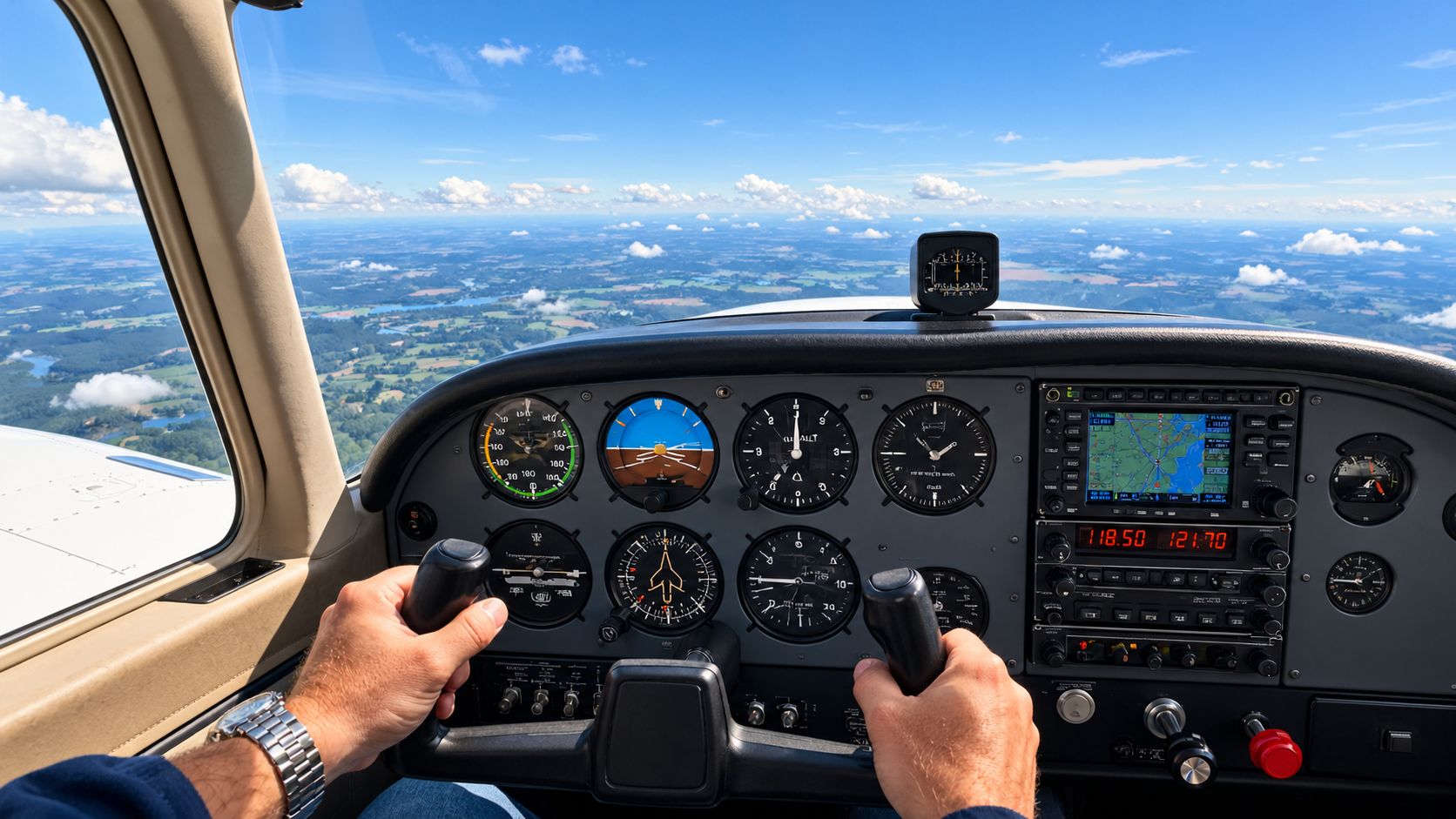
A first lesson often starts on the ground beside the aircraft. You'll walk around the airplane with your instructor, inspect surfaces and controls, review the cockpit, and learn why the checklist comes before movement. The cockpit can feel crowded at first, with unfamiliar instruments, switches, headsets, radio calls, and the persistent need to look outside.
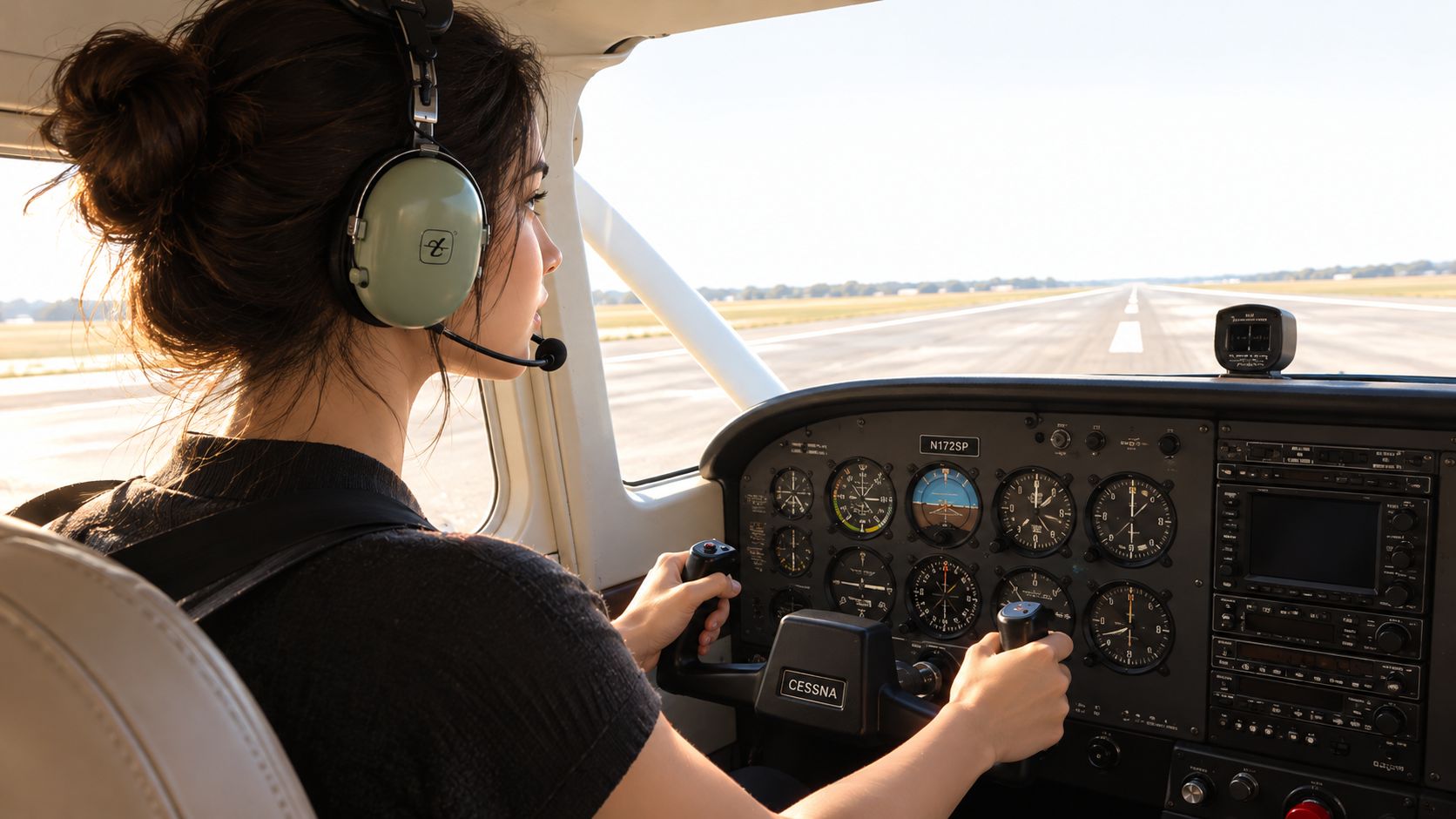
During the first flight, the instructor handles the most demanding phases while you begin to feel how small control inputs affect attitude, airspeed, and direction. You may hold the controls during straight-and-level flight, make gentle turns, and follow prompts that sound simple but require constant visual and mental adjustment.
The CFII discovery flight is one way to experience that first supervised introduction before committing to a longer program. Use it to evaluate more than the sensation of flying. Notice whether the instructor explains decisions clearly, invites questions, follows procedures, and gives you a realistic description of what training will require.
Expect repetition before confidence
Early progress rarely feels smooth. You may improve at altitude control while losing track of radio work, or manage a landing well once and struggle with it later. That variation isn't evidence that you lack ability. It reflects the process of building coordinated habits while learning to divide attention.
Checklist discipline becomes important immediately because it reduces reliance on memory. So does the postflight debrief. Ask what met the current standard, what needs deliberate practice, and what you should review before the next lesson.
The first solo can feel quieter than expected. Your instructor's voice is no longer beside you, yet the procedures remain the same. Solo isn't a reward for bravery. It's permission based on demonstrated readiness, sound judgment, and the instructor's confidence that you can operate safely within the approved conditions.
Watch the rhythm of a supervised early lesson here:
Why Students Quit and How to Stay on Track
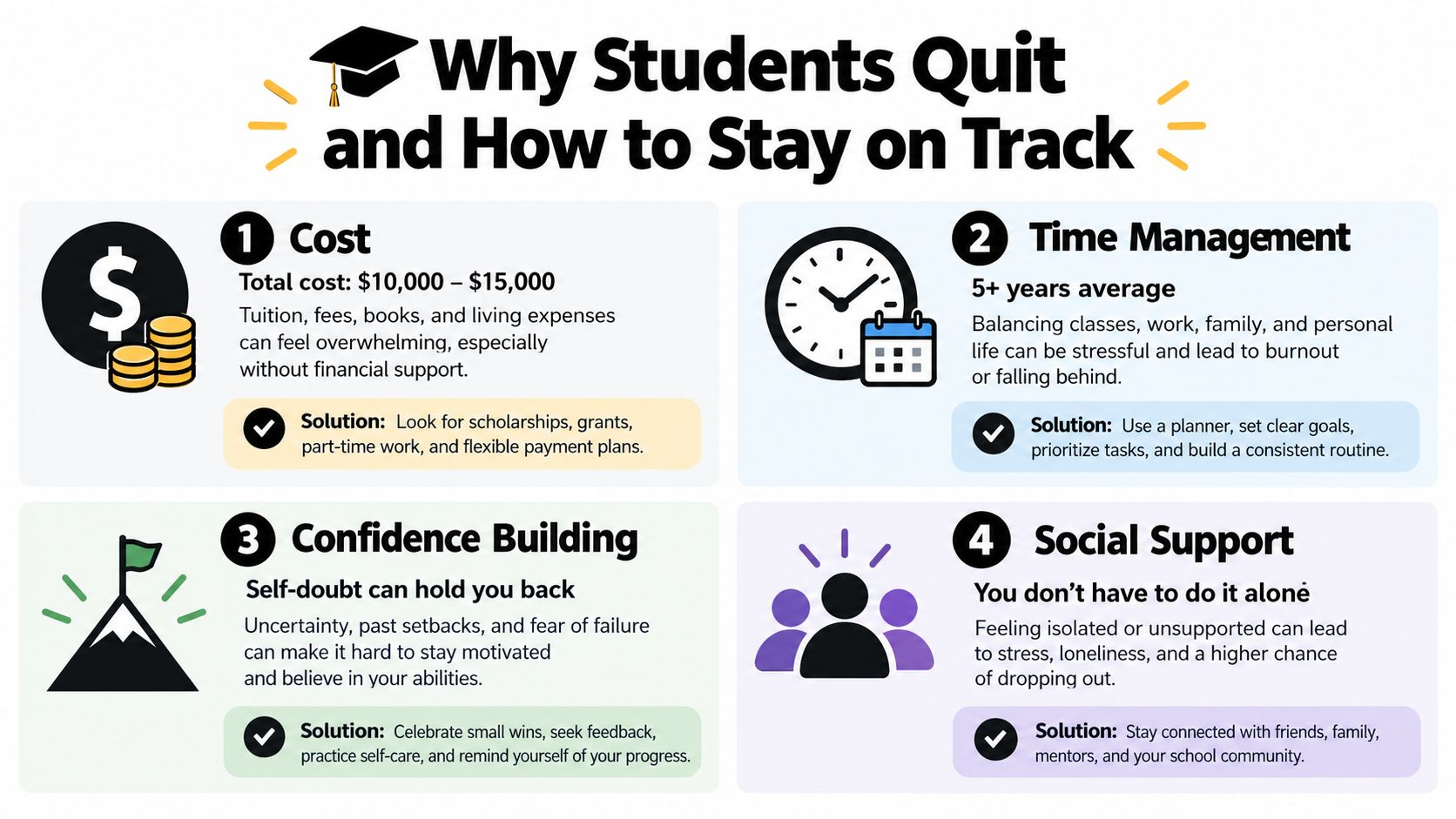
Students often quit for operational reasons, not because they suddenly stop caring about aviation. AOPA-reported research estimates overall student-pilot attrition at roughly 70% to 80%, while approximately 60% of people who obtain a student pilot certificate don't progress to a higher certificate, as documented in AOPA's flight-training research. Earlier longitudinal reporting in the same research found that 34.2% discontinued training from one year to the next and 13.9% became certificated airmen in the measured period.
A separate analysis cautions that unmatched FAA student-certificate and private-checkride cohorts may imply a dropout range closer to 50% to 60%, rather than the commonly repeated 70% to 80% figure, as discussed in this analysis of student-pilot persistence. The exact national rate isn't the main lesson. The evidence points to a serious retention problem, and schools should manage it deliberately.
Build a recovery plan before you need one
AOPA identifies poor educational quality, weak customer focus, limited community, and inadequate information sharing among dropout factors. A student can counter those risks with a simple operating cadence:
- Review weekly: Open the digital logbook every week and check currency, missing endorsements, completed lessons, and the next stage requirement.
- Track performance: Record observable items such as stabilized approaches, checklist completion, radio accuracy, and responses to abnormal situations.
- Protect momentum: When weather or maintenance cancels a flight, use chair-flying, simulator time, or a focused ground session to preserve procedures and decision-making.
- Escalate early: If two instructors give conflicting standards or your progress stalls without a clear explanation, request a formal stage review with the chief instructor.
Don't measure progress by hours alone. A student who flies regularly without receiving useful feedback can accumulate time while repeating the same errors. A student who pauses briefly with a written re-entry plan may return more effectively than someone who continues sporadically while financial and academic stress grows.
Next Steps to Begin Your Flight Training Journey
Start with a discovery flight, but treat it as an evaluation of the training environment as well as an introduction to aircraft control. Ask who will instruct you, how lessons are scheduled, how cancellations are handled, and how the school decides that you're ready for solo, cross-country work, and practical-test preparation.
Then address eligibility and finances before making a large commitment. Discuss medical qualification with an aviation medical examiner early, especially if you have questions that could affect your training plans. Request a written quote that separates included services from exclusions, and ask how the school handles pauses, retests, aircraft changes, instructor absences, and long gaps between lessons.
Use a one-week decision process
Over the next week, contact several local schools and request the same information from each. Compare their answers in writing rather than relying on the most enthusiastic presentation.
| Question | What a strong answer includes |
|---|---|
| How will you track my progress? | A syllabus, stage checks, documented standards, and recurring feedback |
| What happens after a cancellation? | A rescheduling process plus ground, simulator, or chair-flying alternatives |
| Who owns the training relationship? | A named instructor supported by a chief instructor or defined escalation path |
| What does the price exclude? | Clear treatment of retests, examiner fees, extra hours, materials, and housing |
| How do I continue after the private certificate? | A realistic explanation of instrument, commercial, instructor, and time-building stages |
Choose a schedule you can sustain. Even a strong school can't solve a training plan that repeatedly conflicts with work, family, transportation, or cash flow. Set a minimum weekly study routine, reserve realistic flight windows, and decide in advance what you'll do when weather or maintenance interrupts the plan.
Flight training for beginners becomes manageable when you treat it as a system rather than a test of willpower. The aircraft skills matter, but so do instructor continuity, honest budgeting, documented standards, and a recovery plan for difficult weeks.
CFII offers a structured Career Track for zero-time students that combines one-on-one instruction, progress tracking, study resources, coordinated checkrides, and a path through private, instrument, commercial, CFI, and CFII training. Visit CFII to compare its fixed-price training structure and optional paid-instructing pathway with the alternatives available in your area.
Planning to fly for a living?
See what the path from zero to a pilot career looks like, what it costs and how long it takes.
Learn to fly in Riverside
We train at Riverside Municipal Airport in factory-new airplanes with a parachute built in. Start with a one hour discovery flight, no experience needed.