Why your program is not covered
Federal student aid goes to students in an eligible program at a school the Department of Education has approved to take part. To qualify, the school generally has to be accredited, apply to the Department, and run at least one program that meets the rules. A vocational program at a non-college school has to clear a size threshold too: 600 clock hours over at least 15 weeks.
Many good programs never apply. Some are too short, some are not accredited in the way the rules need, and some simply do not want the paperwork. That tells you nothing about the quality of the training. It tells you the FAFSA is not your route.
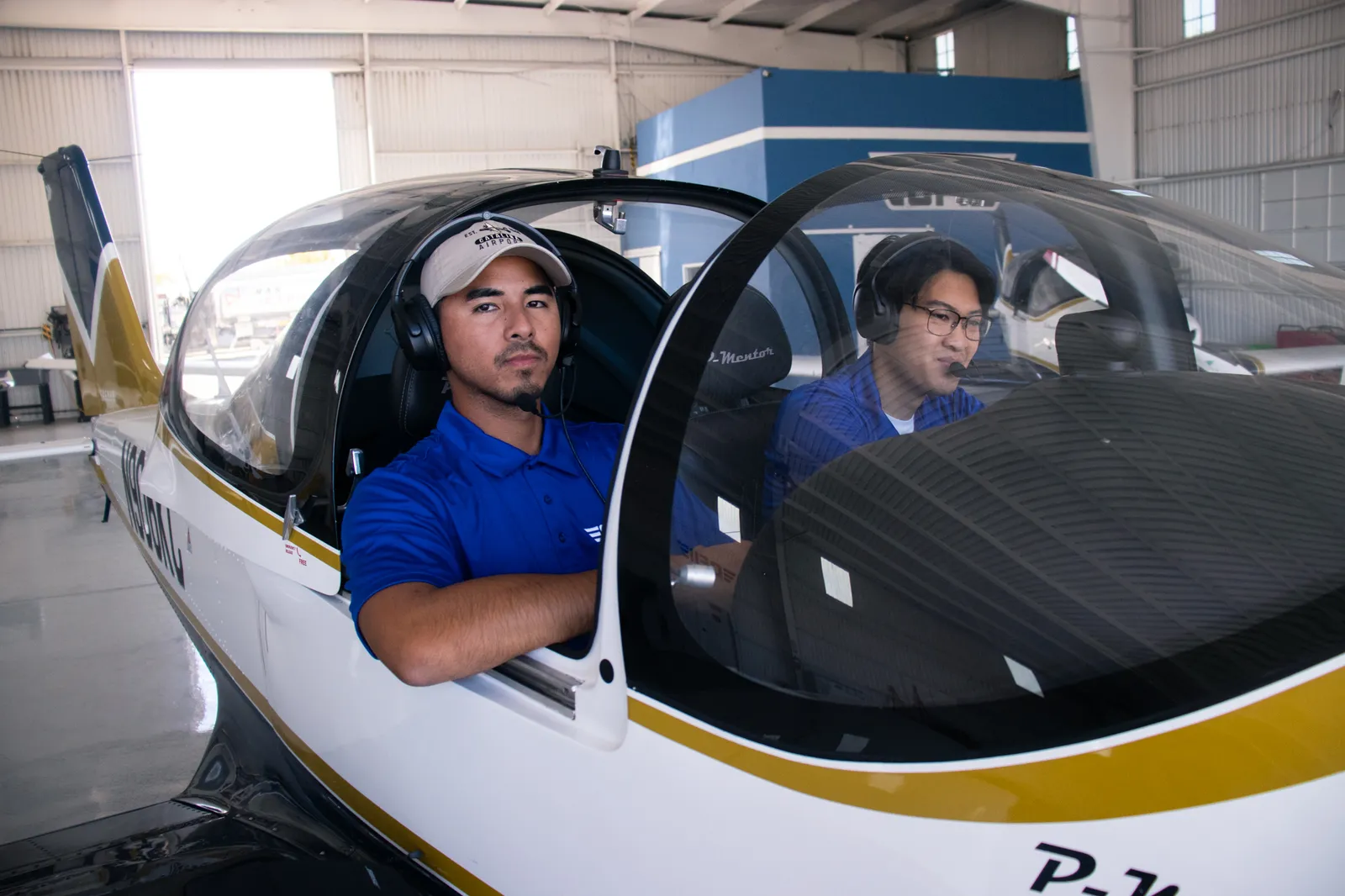
Flight training is a clear case. Federal aid reaches it only inside a college degree program. A standalone school like ours is outside that, so our career program is paid for in the ways below, and it is the worked example on this page.
The ways people actually pay
Cheapest first. Most people combine two or three.
| Source | What it costs | Who it is for |
|---|---|---|
| Scholarships and grants | 0% | Everyone. Apply before anything else; you never pay it back |
| Employer tuition assistance | 0% | Anyone whose employer has a plan: up to $5,250 a year tax free, and since 2026 the limit is permanent and rises with inflation |
| WIOA training funds | 0% | Eligible workers, often laid-off ones, at a provider on the state's approved list; ask at an American Job Center |
| GI Bill | 0% | Veterans. Covers many non-college programs; for flight training, Part 141 schools only and a private certificate first |
| 529 plan savings | 0% (tax-free withdrawal) | Families with a 529: since July 2025 it can pay for credential programs, including state or federal licenses, if the program qualifies |
| Home equity loan or HELOC | About 7% to 8% | A parent or relative who owns a home. Usually the cheapest loan a family can get |
| Family loan | 0% to 8% | A relative lends directly. Put it in writing |
| Credit union personal loan | About 11% average on a 3-year loan, 18% maximum at a federal credit union | Anyone with some credit. Banks averaged 12% on the same loan |
| The school's lending partner | Usually the highest rate | Easiest to get approved. Watch for an origination fee |
| Income share agreement | Varies; legally a loan | Some bootcamps. Read it as a loan, because the CFPB says it is one |
| Payment plan with the school | 0% to a fee | Shorter programs. Ask; many schools do not advertise it |
The rates are national averages from late 2025 and 2026, and yours depends on your credit, income and collateral. The credit union figures are from the NCUA's quarterly table, and the federal credit union ceiling is set by its board and currently runs to September 2027.
A few of those deserve a sentence each
- Employer assistance. Section 127 of the tax code lets an employer pay up to $5,250 a year of your education costs without it counting as income, and it can go toward a qualifying training program or, if the plan allows it, toward student loan payments. Ask HR whether there is a plan. Many people never do.
- WIOA. The Workforce Innovation and Opportunity Act funds retraining through local American Job Centers. The provider has to be on the state's eligible training list, and the amount is set locally, so walk in and ask. Truck driving and trade programs are common uses.
- 529 plans. The 2025 tax law let a 529 pay for credential programs: ones on a state workforce training list, ones leading to a recognized credential, and any occupational license issued or recognized by a state or the federal government. Ask the plan and a tax adviser whether yours qualifies. Families who saved for college now have a route that does not require college.
- The home. If a parent owns a house, a home equity loan prices on the house rather than on a 20-year-old's credit file. It is their loan, which you repay to them. Our how to pay for flight school guide walks through it, with the rates.
- The co-borrower. Most young borrowers are asked for one, and it is a large ask of the person you turn to. How to ask someone to be your co-borrower is the conversation.
The payback worksheet
Before you borrow for any program, do this sum. It takes ten minutes and it settles most arguments.
- Total cost, all in. Tuition, exam and licensing fees, equipment, and living costs for the months you cannot work. Get the school to put the first three in writing.
- Months until the work itself pays you. Not until graduation. Until a paycheck arrives from the job you trained for.
- What the job pays in year one, year three and year five. From the Bureau of Labor Statistics handbook or the school's placement data, not the brochure. Use the lowest 10% figure for year one.
- What you earn now. The difference between that and line 3 is what the program actually buys.
- Years to pay back = line 1 divided by the yearly difference in line 4. If the answer is more than five, think hard. If it is more than ten, do not borrow for it.
A made-up example with round numbers: a $20,000 program that moves you from a $35,000 job to a $55,000 one pays itself back in a year. A $90,000 program that moves you from $35,000 to $45,000 takes nine years, and only makes sense if the pay keeps climbing after that.
For a pilot it does: instructing pays modestly, then the airline years change the sum completely. Pilot salary has the curve. Run yours with your own numbers.
Before you borrow
- Origination fees are interest in disguise. A 5% fee on a $50,000 loan is $2,500 gone on day one. Ask every lender whether there is one.
- Deferred is not free. A loan with no payments for 12 months is usually charging interest the whole time and adding it to the balance. Know what the balance will be when the first bill arrives.
- Do not borrow rent on the training loan if you can avoid it. Training-loan rates are usually the highest on the list. Cover living costs from work, family or a cheaper loan.
- Check for a prepayment penalty. You will want to refinance once you have an income. A loan that penalizes early payoff takes that option away.
- Scholarship decisions take months. Apply to everything, then start on the money you already have. How to write a scholarship application people actually read is the method.
When not to borrow at all
- There is no recognized credential at the end. A certificate the school prints itself is not a license. If employers do not hire against it, the loan is buying a course, not a career.
- The payback sum does not work. Not even with generous numbers. Some programs are a good idea only if someone else pays.
- The jobs are not where you live and you will not move. Check the hiring before you check the financing.
- You have not tried the work. A day on site, a ride-along, a discovery flight. Find out you hate it before you owe for it.
What we tell our own students
Our program is $89,000 and we work with a lender who specializes in flight training. They set the rate after seeing an application, so we do not quote one. If your family can borrow against a house, that will be cheaper than anything we can arrange, and we would rather say so now. Scholarships first, then the cheapest money available to your family, then the specialist lender for whatever is left.
Questions
Can you use FAFSA for trade school or a bootcamp?
Only at schools the Department of Education has approved to take part in federal aid, in a program that meets its rules, including a minimum of 600 clock hours over 15 weeks for vocational programs. Many bootcamps, driving schools and standalone flight schools are outside that, so the FAFSA will not help there.
Can a 529 plan pay for a trade or license program?
Since July 2025, yes, if the program qualifies: it has to lead to a recognized credential, be on a state workforce training list, or prepare you for a state or federal occupational license. Check with your plan before withdrawing, because a non-qualifying withdrawal is taxed and penalized.
Does the GI Bill cover flight school?
Yes, with conditions. Vocational flight training must be at an FAA Part 141 school approved for VA benefits, you need a private pilot certificate first, and you need a current medical certificate. Flight training inside a college degree is paid under the college rules instead.
Will my employer pay for training?
Possibly. An employer educational assistance plan can pay up to $5,250 a year tax free, a limit that is now permanent. Not every employer has a plan and many employees never ask, so ask.
Is an income share agreement better than a loan?
It is a loan. The CFPB ruled in 2021 that income share agreements are private education loans under federal law, so compare one the way you would compare any loan: total repayment in the realistic case, not the best one.
Sources
- Federal Student Aid, Eligibility for Federal Student Aid (PDF)
- FSA Handbook 2026-27, Volume 2 Chapter 1, Institutional Eligibility
- FSA Handbook 2026-27, Volume 2 Chapter 2, Program Eligibility
- IRS, Updates to frequently asked questions about educational assistance programs, April 2026
- IRS, Publication 15-B (2026), Employer's Tax Guide to Fringe Benefits
- CareerOneStop (US Department of Labor), WIOA-Eligible Training Program Finder
- VA, Flight training benefits, updated July 2025
- VA, Non-college degree programs, updated December 2024
- Public Law 119-21, Section 70414, qualified postsecondary credentialing expenses (enrolled text)
- IRS, Topic no. 313, Qualified tuition programs, reviewed September 2026
- NCUA, Credit Union and Bank Rates, 2025 Q4
- NCUA, Board extends 18 percent loan interest rate ceiling to September 2027, February 6 2026
- Bankrate, current HELOC rates
- CFPB, action against Better Future Forward over income share agreements, September 7 2021
Last reviewed October 2026. Rates, tax limits and program rules move, so check the source before you make a decision on one of these numbers.